

Florence in Snapshots: A Photo Story of a City That Speaks in Images
A Florence that photographs itself: alleyways, squares, scents and sunsets. A visual diary through Santa Croce, San Miniato, the Uffizi, Ponte Vecchio and a thousand tiny details that make you fall in love. No filters, no long explanations: just emotions — with a wry note on prices and tourists.
VIAGGI | TRAVELS
Rebecca P. & Raffaele F.
11/4/202510 min read
There is a Florence you read about in guidebooks, and a Florence you photograph with your eyes. We all know the first; the second is slower, softer, more under the skin.
It is the city that does not explain, teach or tell: it shows.
Frame after frame, without hurry, like an analogue film slowly revealing itself, its colours arriving in waves.
Florence, a Photograph That Never Stops Developing
The morning begins in Via Ricasoli, where the light is still fresh and footsteps echo between the buildings as they wake.
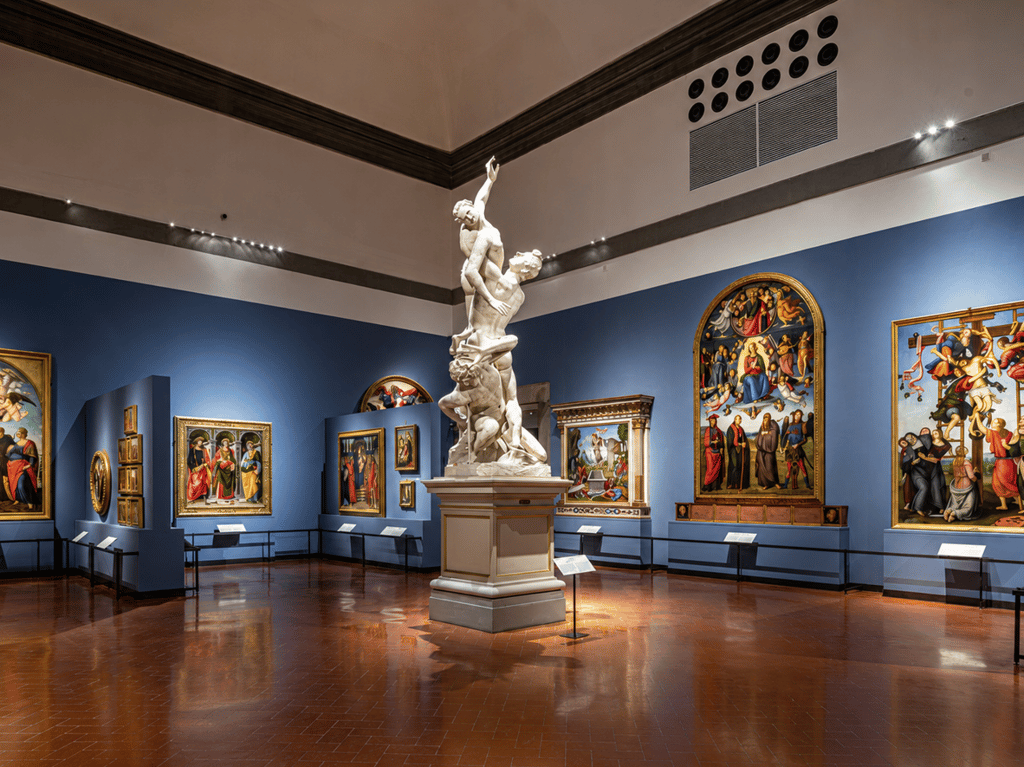
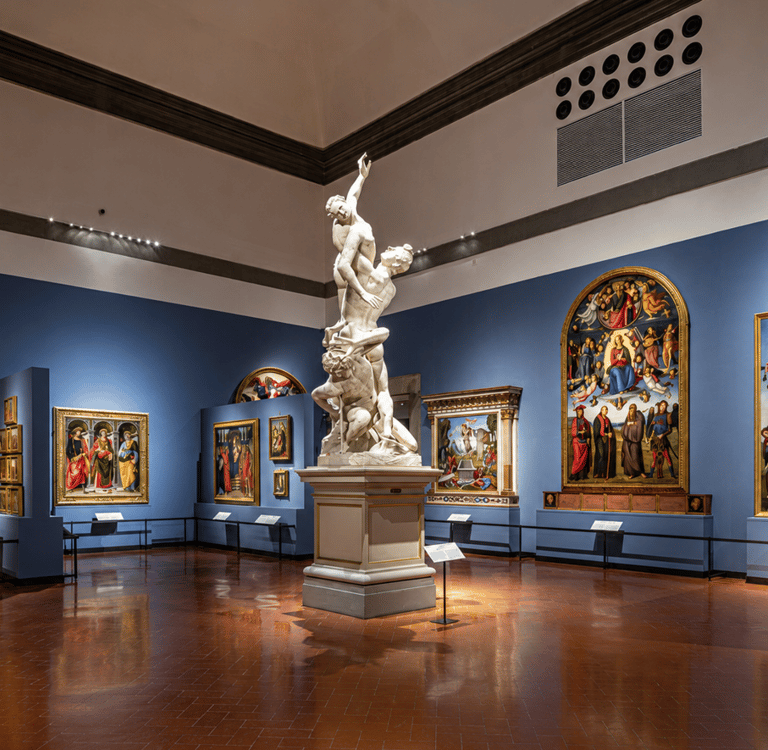
The Galleria dell’Accademia is a doorway that does not look like a doorway: those who pass by do not yet know they are entering a temple of marble, lines and silence.
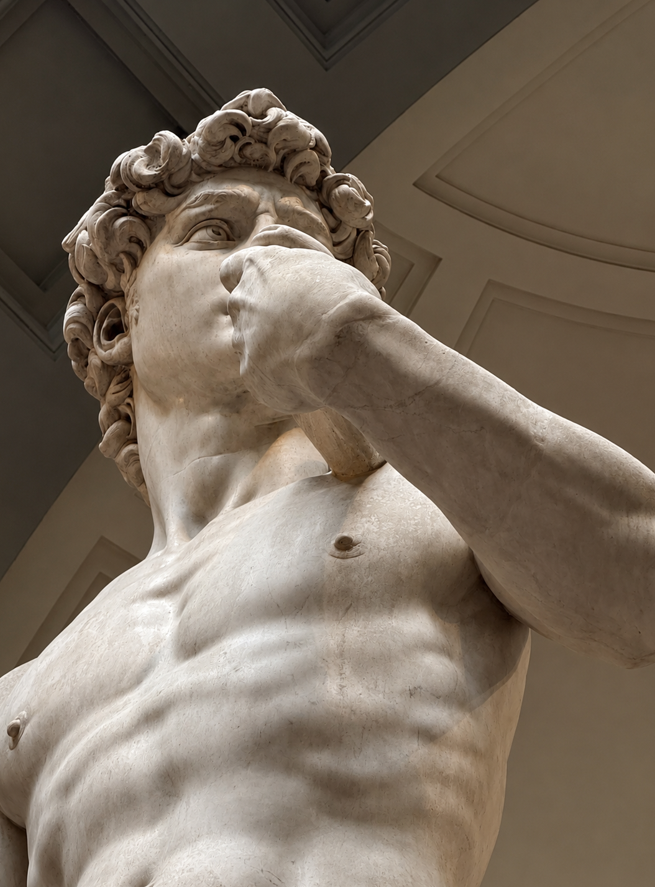
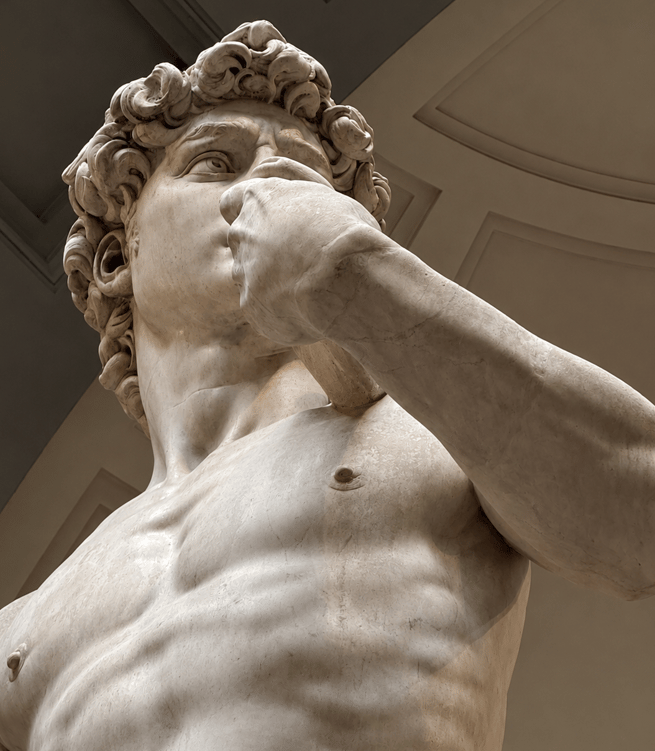
Inside, time narrows. The statues advance like real people, the light falls from above and lands on the shoulders of David, who does not move yet seems to breathe.
Tourists freeze before the giant, and for one minute no one speaks. It is a photograph without a shutter, an image that stays with you even when you step back out into the street.
Outside, Florence starts moving again, and everything flows faster. Narrow lanes, ancient doors, balconies bursting with flowers.
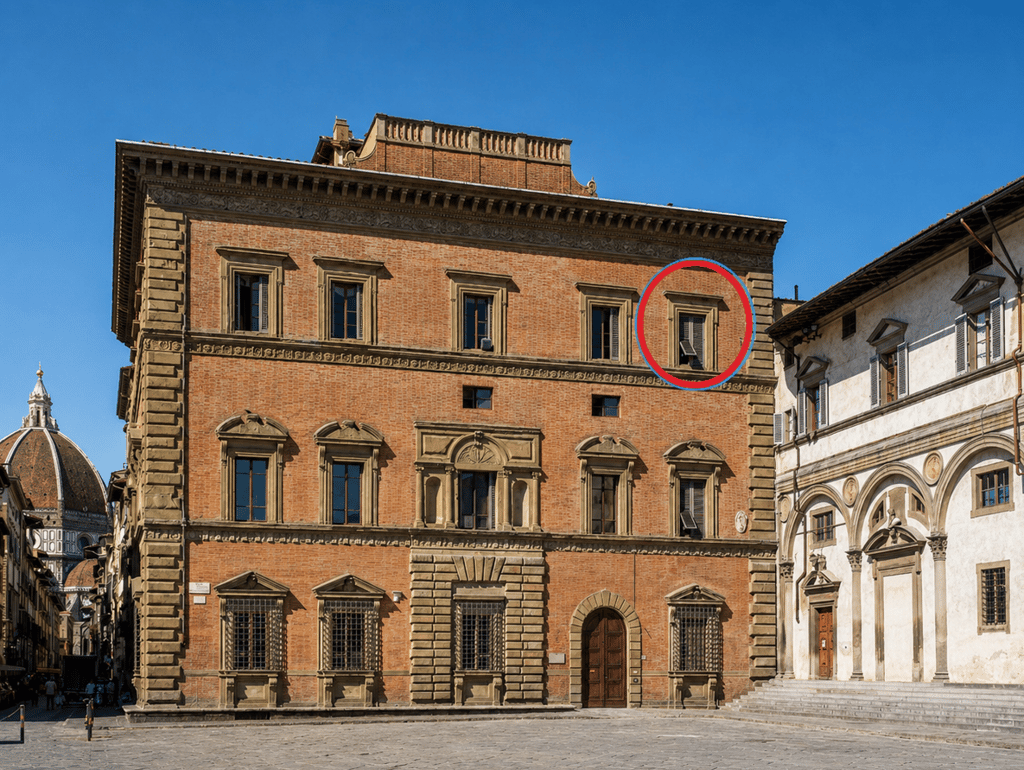
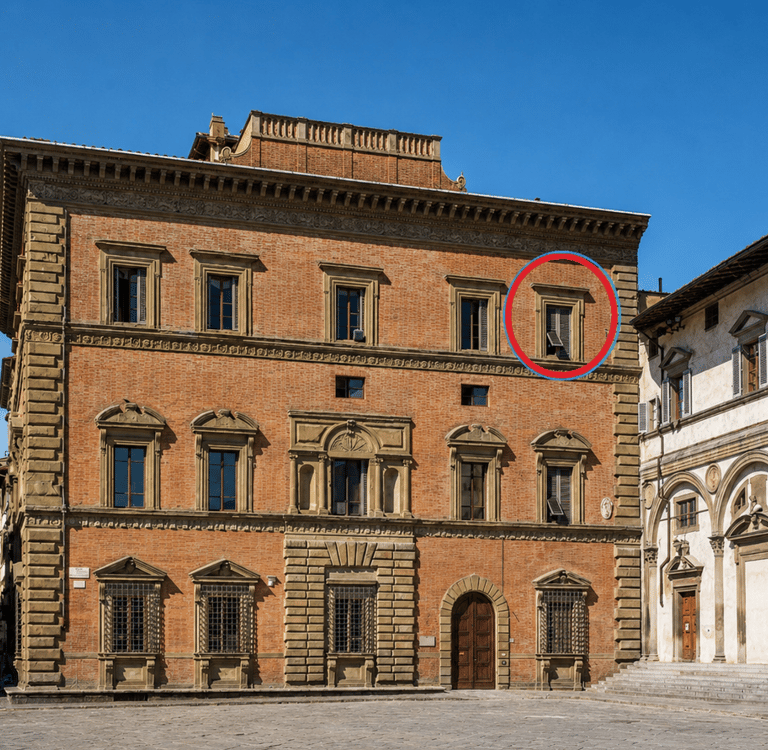
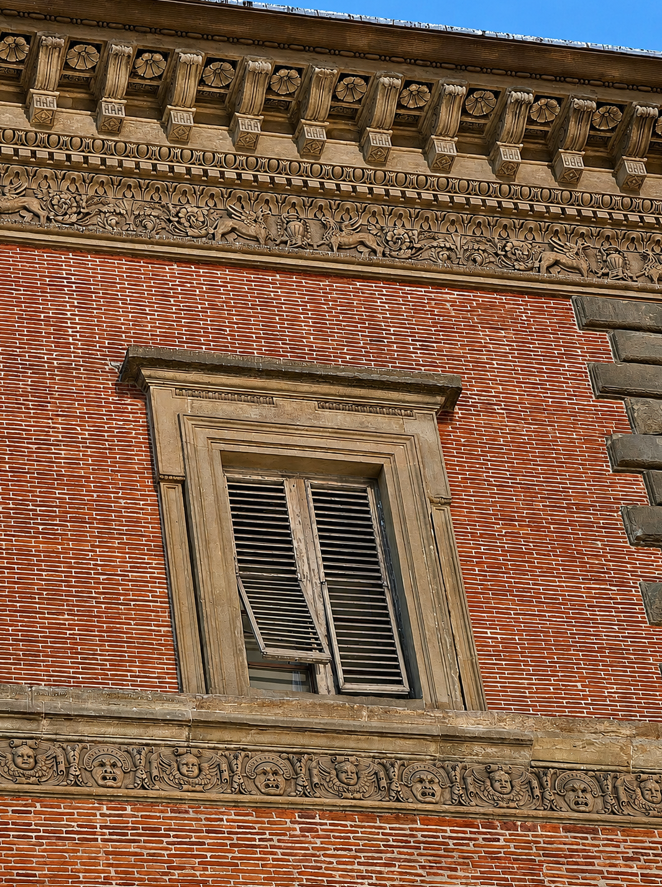
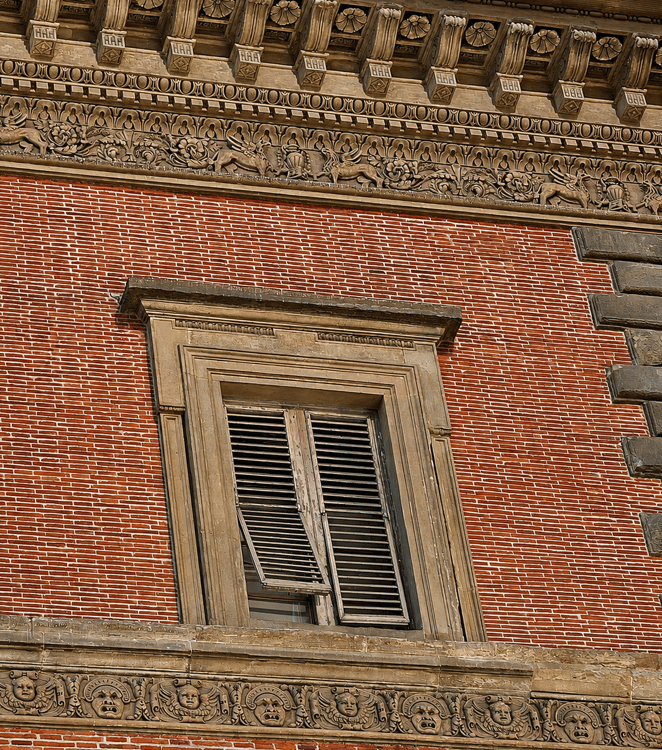
There is a window that never closes, the Finestra Sempre Aperta, a tiny wonder that seems to greet whoever passes by. Here the historic centre is a mosaic of stone and shadows, and every step feels like a ready-made frame. No one really stops, and yet everyone looks: that is Florence — it photographs you while you photograph it.
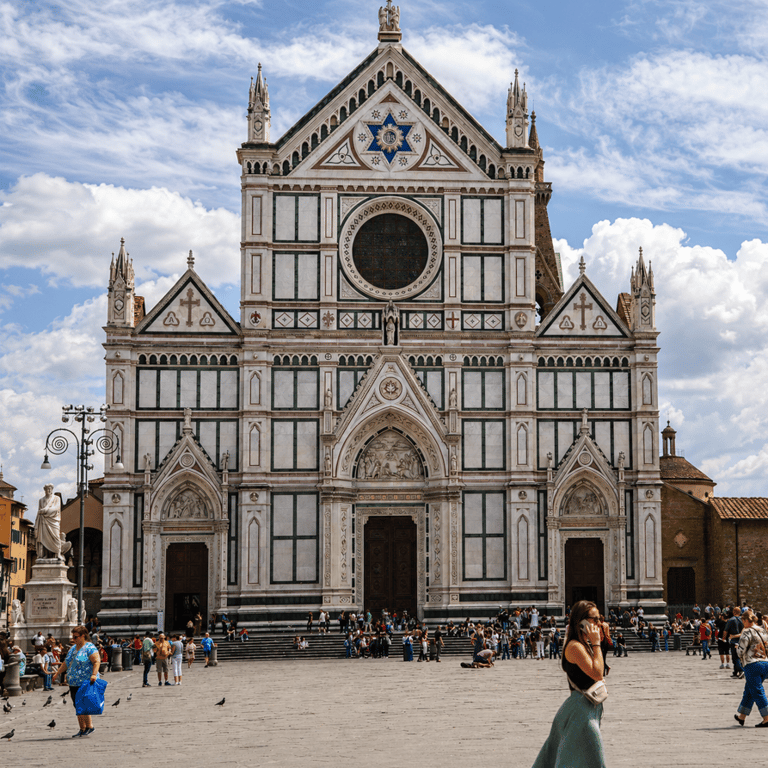
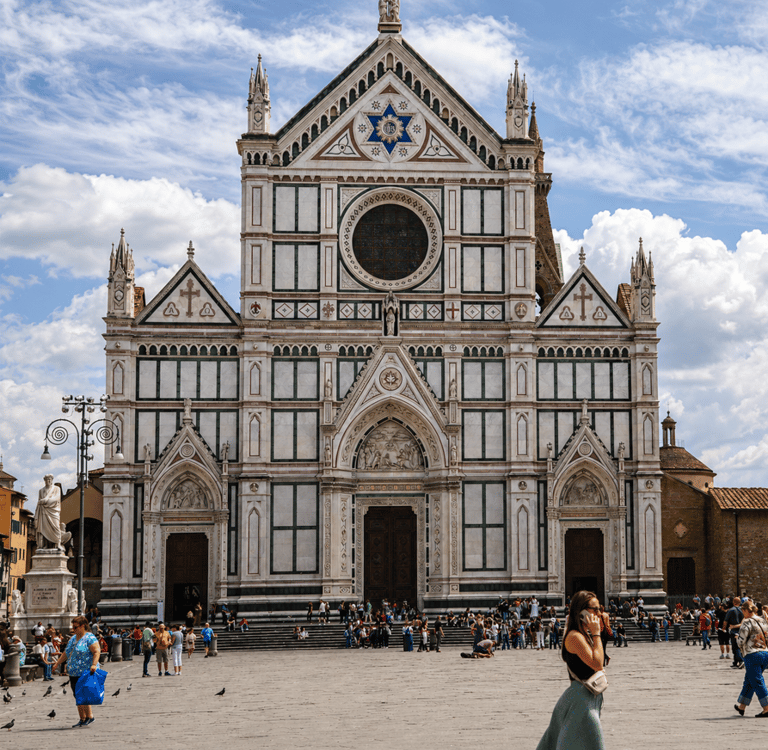
Then the space widens. The square opens all at once, vast and bright, and the Basilica of Santa Croce appears with its white, perfect façade, as though it had been drawn yesterday.
No words are needed: the geometry, the marble and the contrast with the sky are enough. On one side, bicycles are parked in disorder; on the other, tourists sit on the steps, like extras in a set built precisely to be filmed.
As you walk, the streets become gradually narrower, the light turns gold, and the city switches its sounds back on. In the heart of the centre, among ancient walls, you come across Dante’s House. You do not need to go inside to feel its history: it is enough to walk between the tall houses, the small windows, the stones that still seem to echo with warm medieval voices.
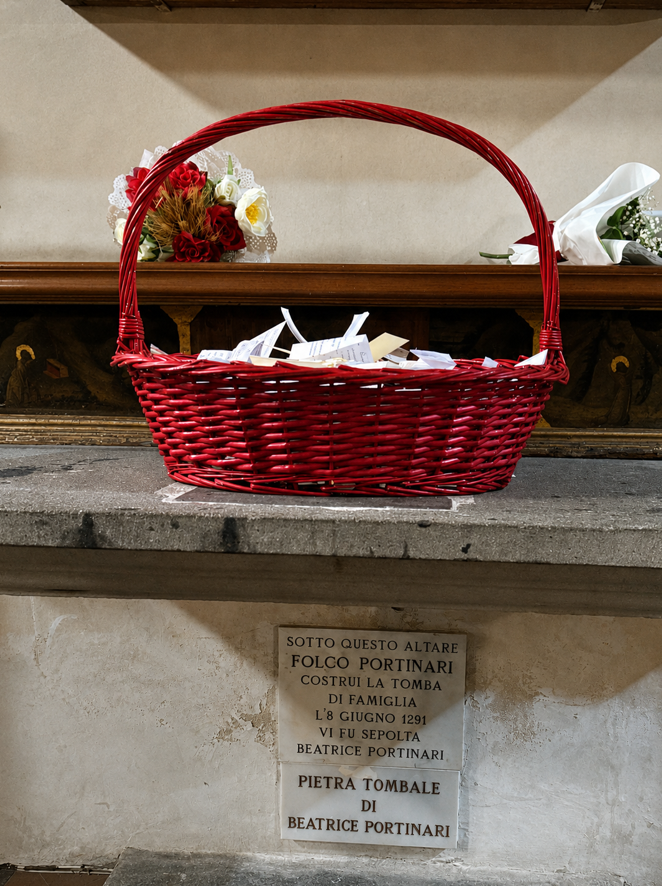
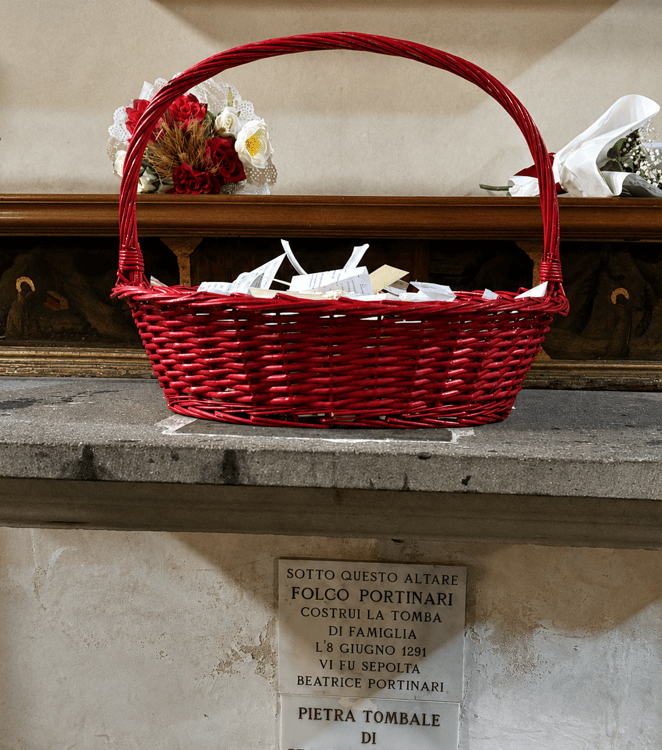
Not far away, the Church of Santa Margherita dei Cerchi, the Church of Beatrice, appears almost by chance. No grand entrance, no crowd: just a quiet passageway, where the most famous love story in literature still seems to hang in the air. More a secret than a monument.
Inside, the air is still, with handwritten vows and love notes left on little slips of paper. Outside, the noise of the city goes on, but in that room it feels as though you are inside a freeze-frame, and the light does not arrive harshly: it wraps, softens, caresses.
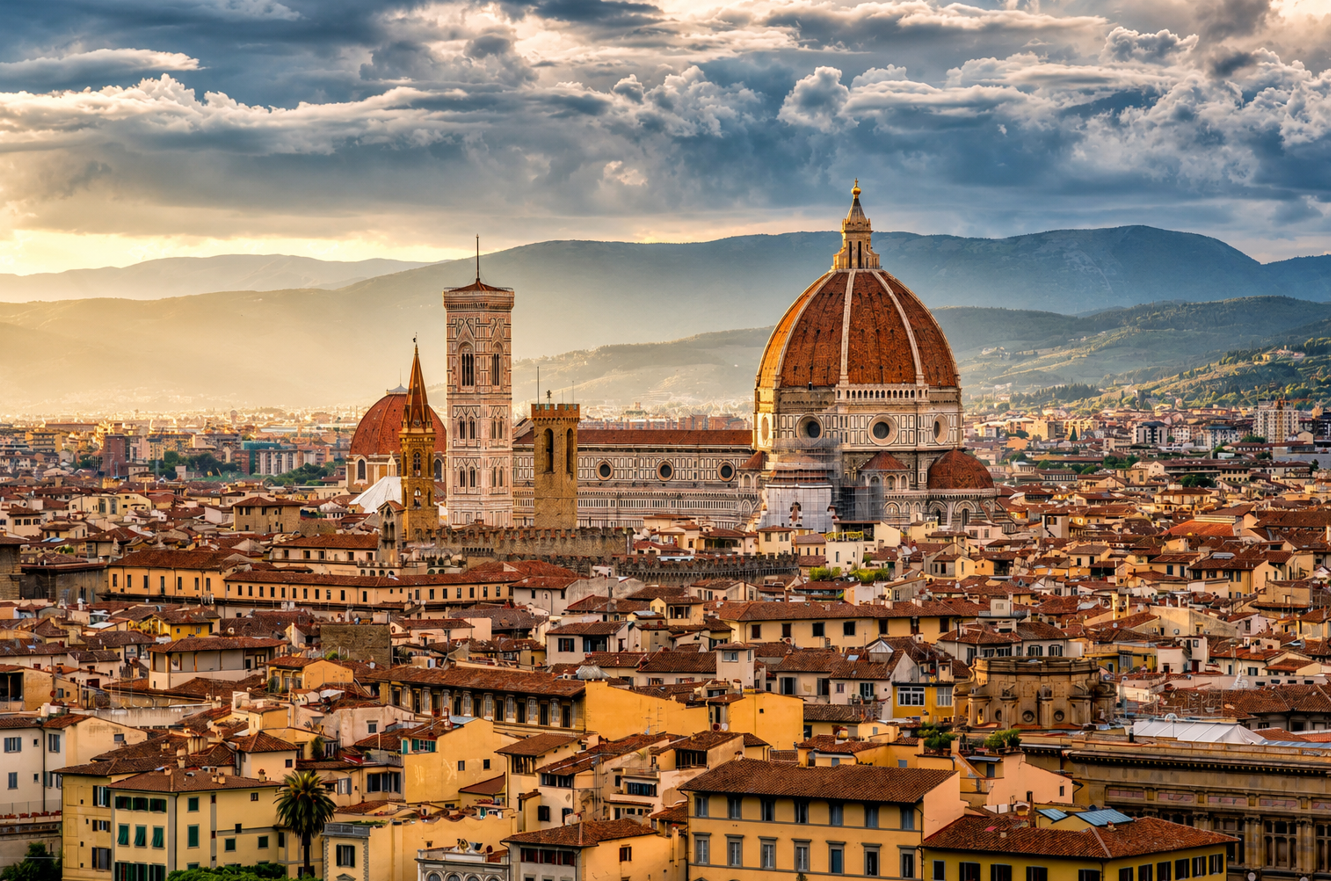
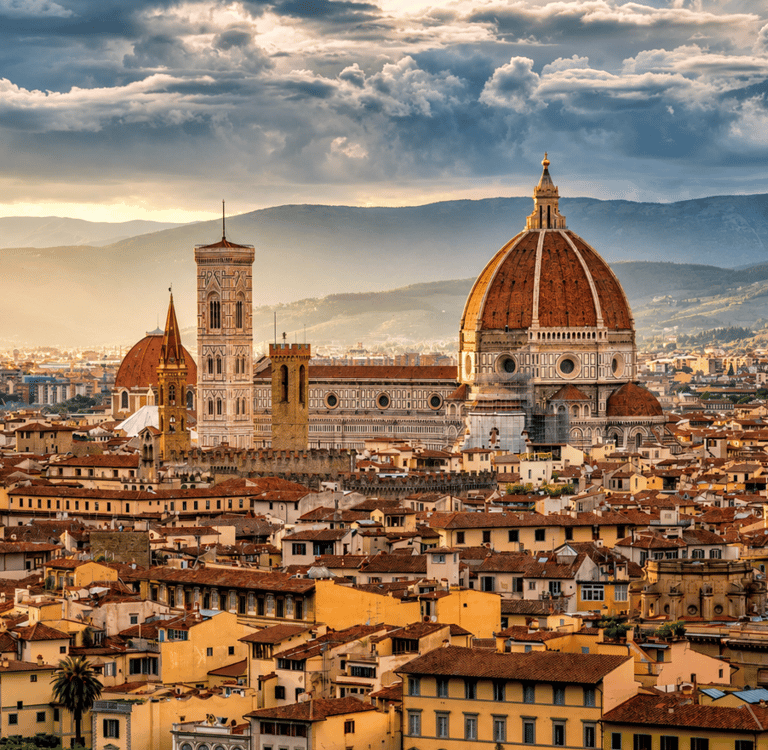
From there, the route moves like a natural current towards the great protagonist: the Cathedral of Santa Maria del Fiore.
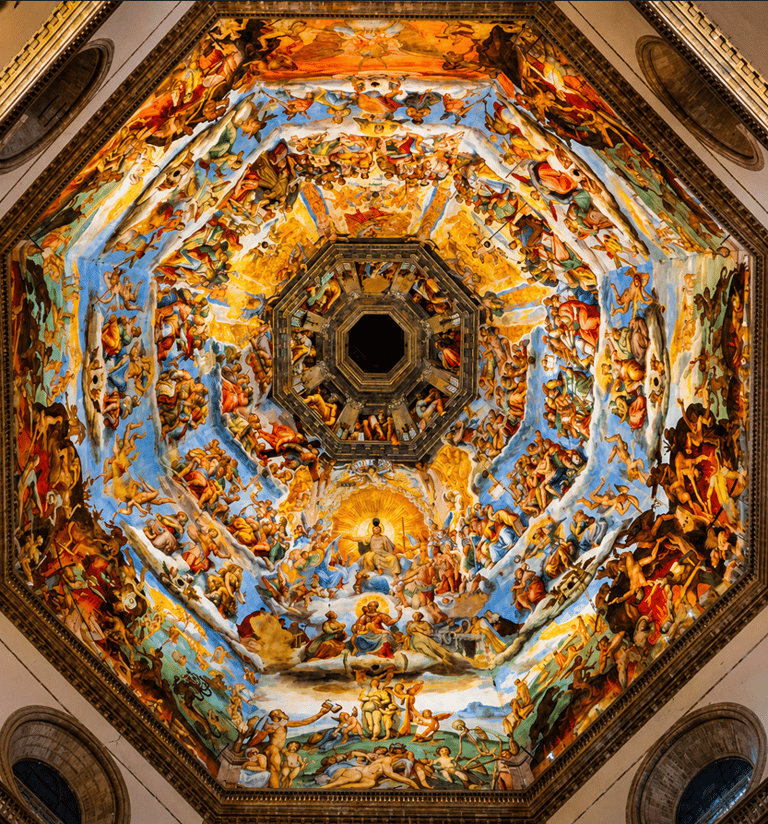
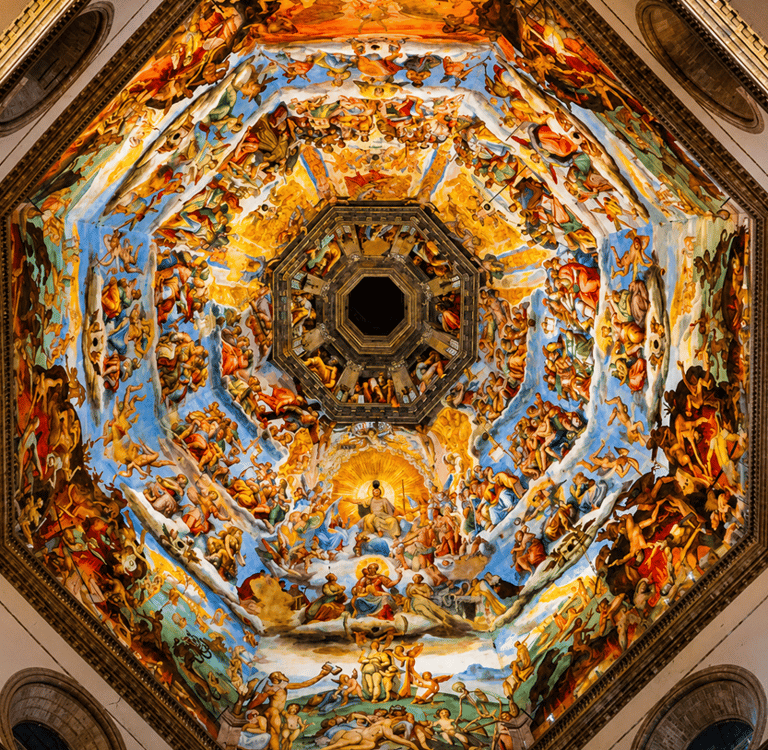
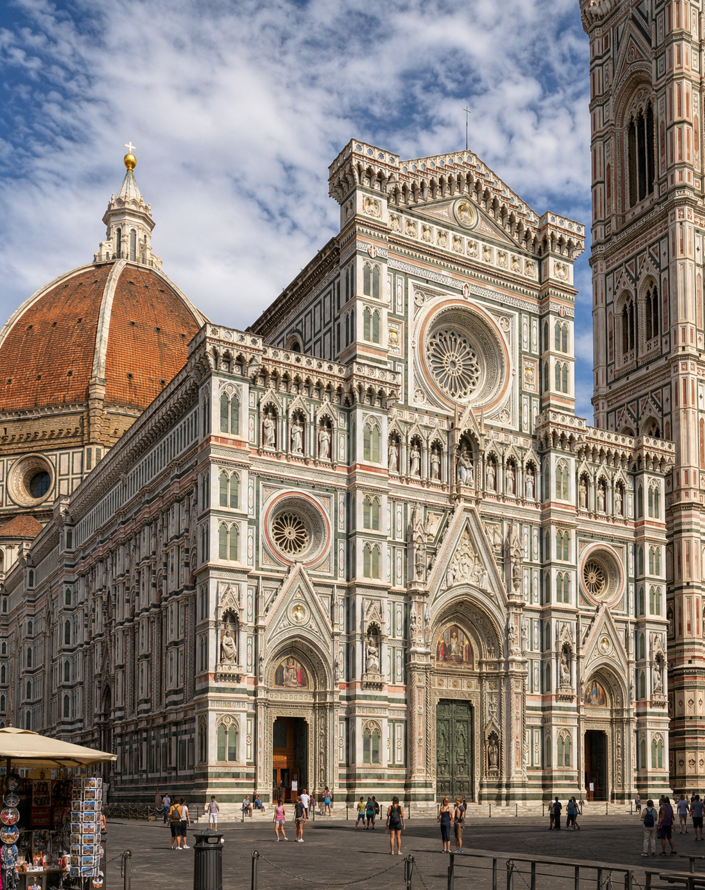
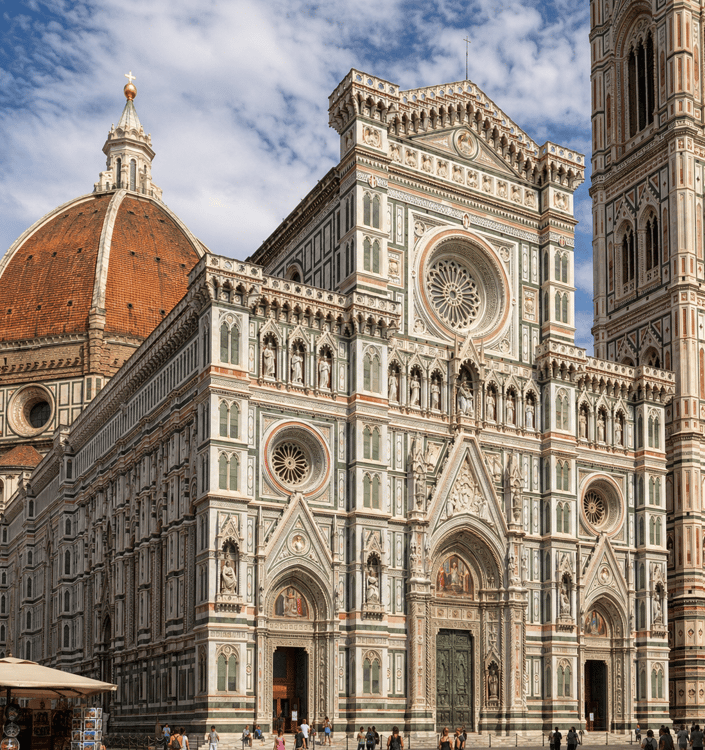
You do not look for it: it appears; first the tip of Giotto’s Bell Tower, then the mass of the Duomo explodes between the buildings. People walk with their eyes turned upwards, almost stumbling over their own steps, amazed as if it were the first time they had seen something so precise, so immense, so impossible to truly photograph. Every detail is a drawing, every slab of marble a colour that never fades. The frescoes adorning Brunelleschi’s Dome and the geometry of the Baptistery of San Giovanni are yet another reminder that Florence is not merely beautiful, but almost superhuman.
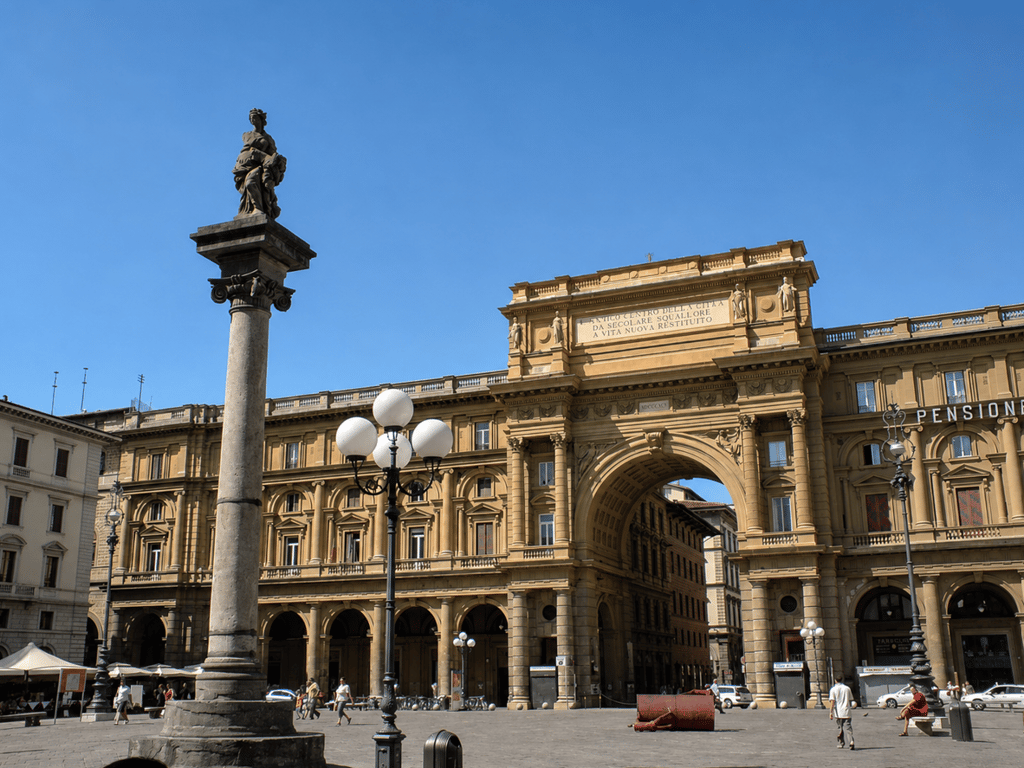
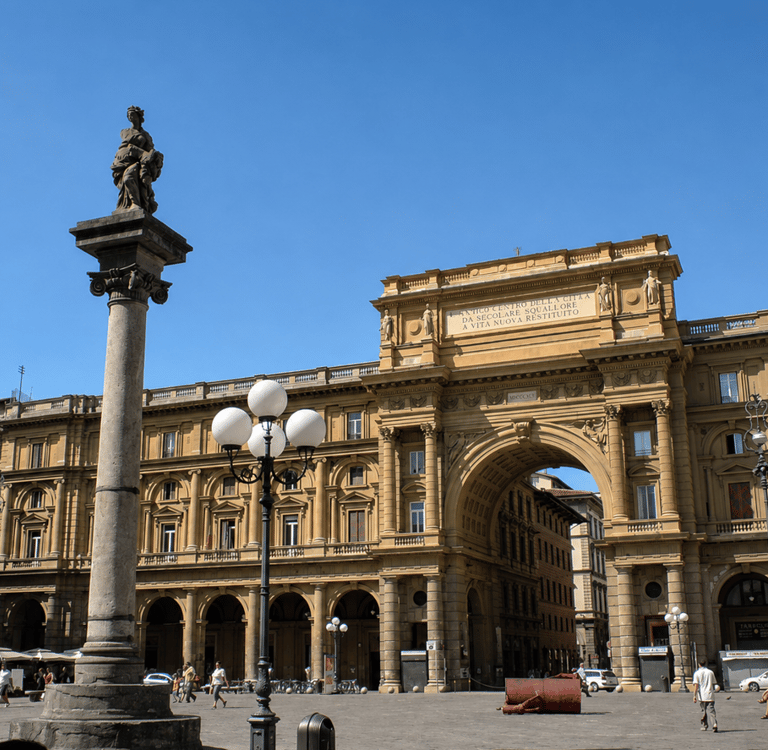
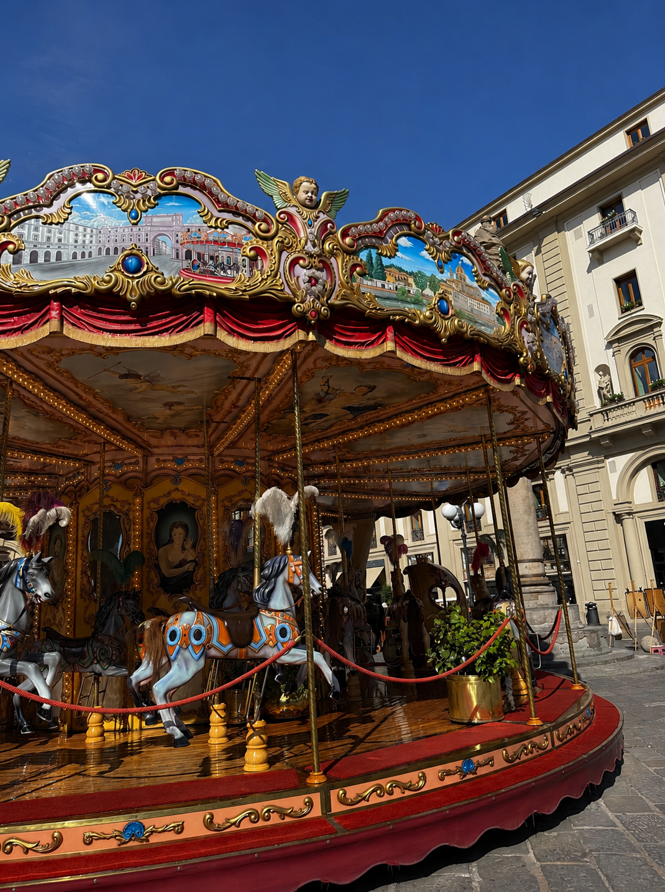
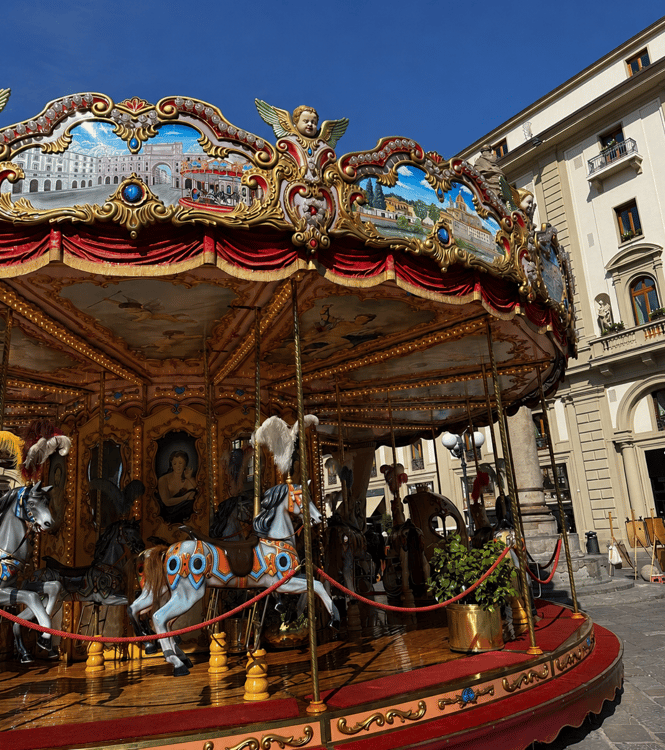
The road descends and becomes more modern, full of voices and shop windows, and suddenly the rhythm opens out again into Piazza della Repubblica, elegant, symmetrical, theatrical. A carousel has been turning there for years, slowly, colourfully, like a childhood memory left suspended in the air. Outdoor tables, gleaming coffee cups, street musicians, lamps hanging between historic cafés: the square looks like a vintage photograph, the kind that needs no filter.
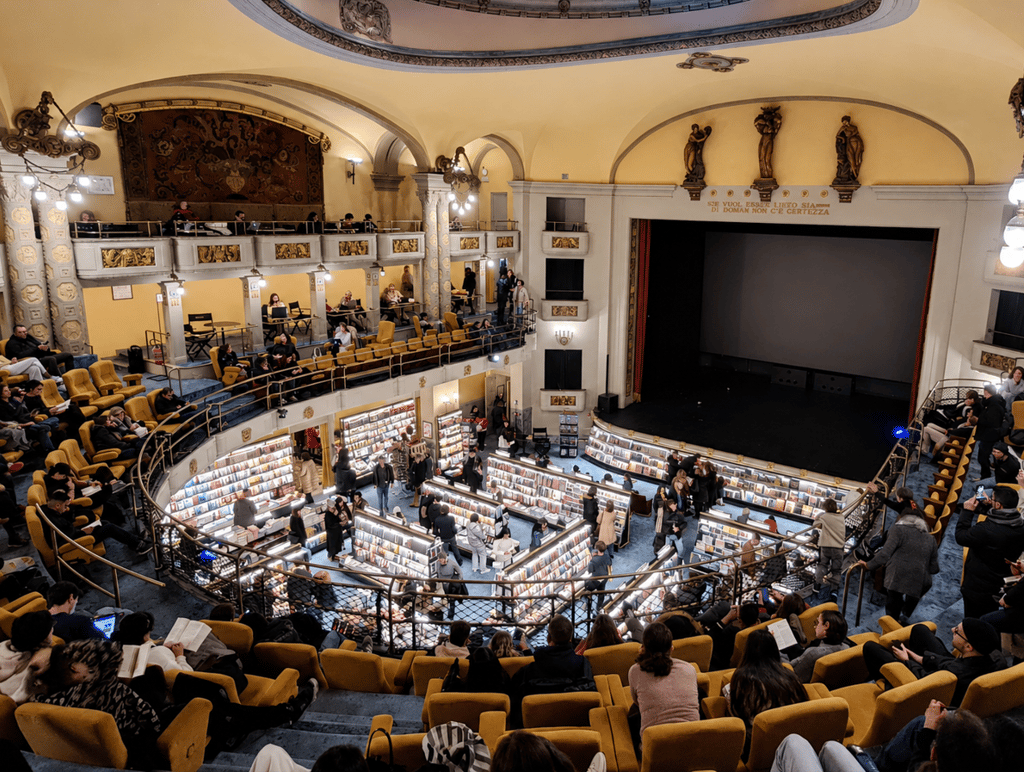
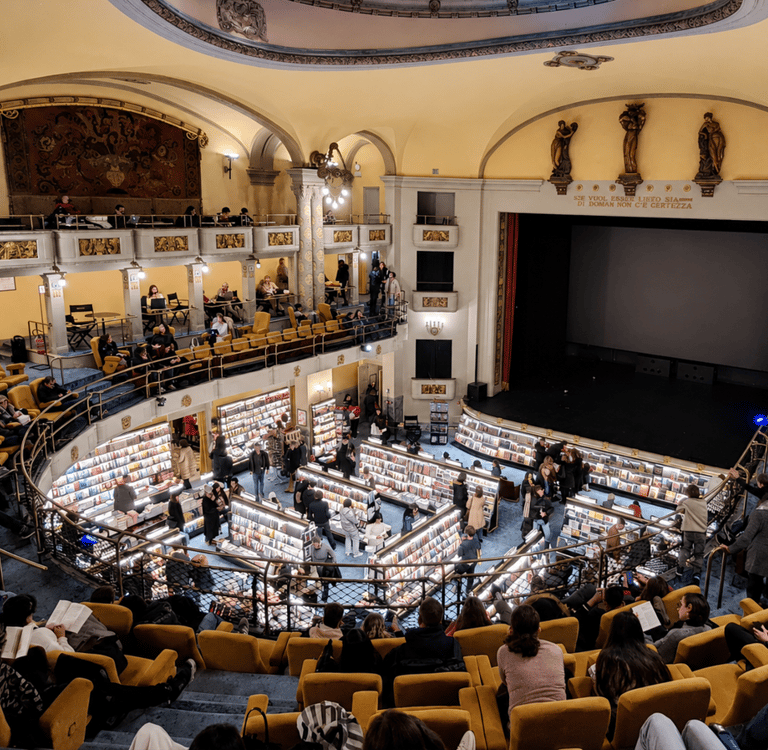
A few steps further on, hidden where no one expects it, Giunti Odeon gathers another kind of beauty: paper, cinema, words. A warm refuge, a place that smells of books and velvet. Here the city sits down, breathes, slows. Not everyone knows it, but those who enter carry it away like a secret photograph.
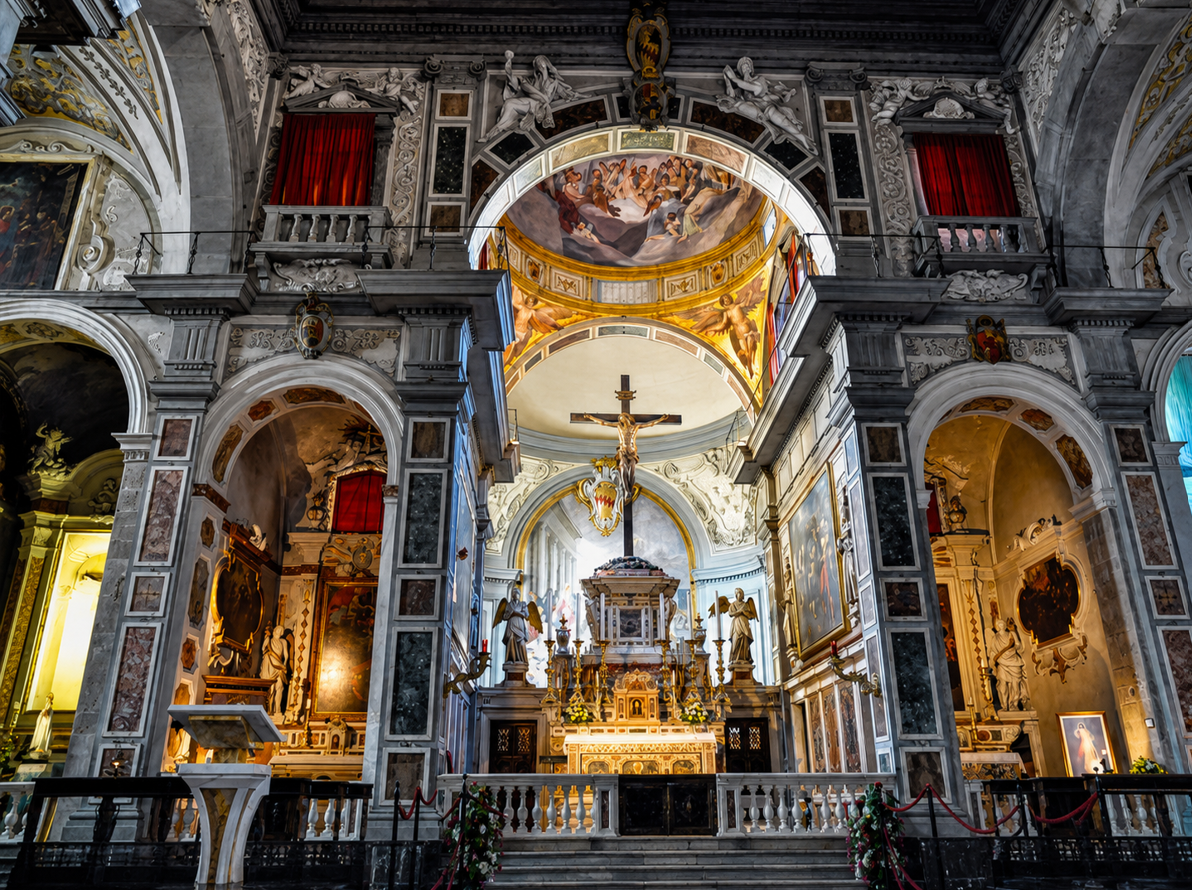
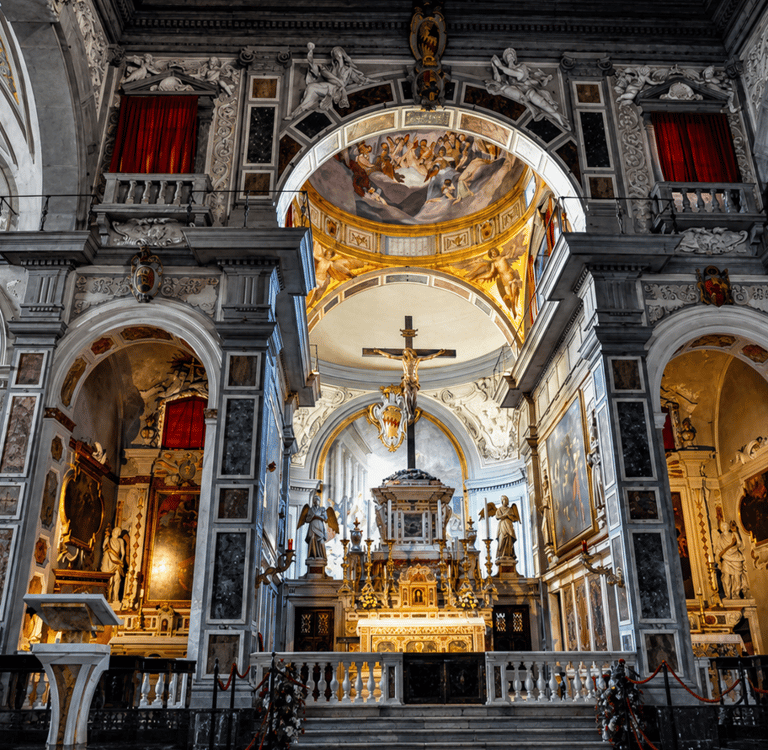
And when the light drops between the buildings, you pass the Church of Ognissanti, with its elegant portal, sober façade and silence that feels like an invitation. Florence knows how to be monumental, but also shy. Sometimes a half-open door is enough to make it feel alive.
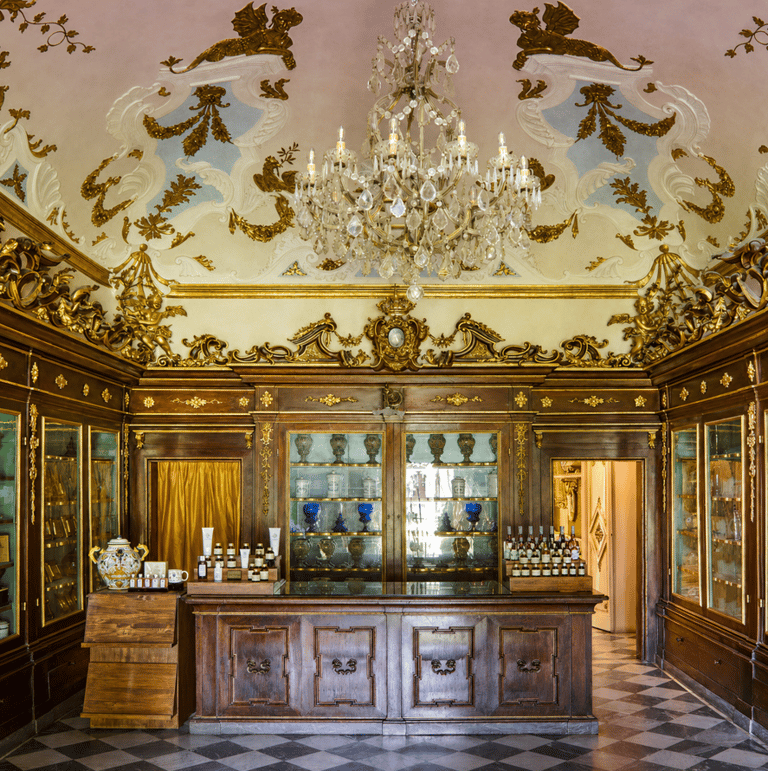
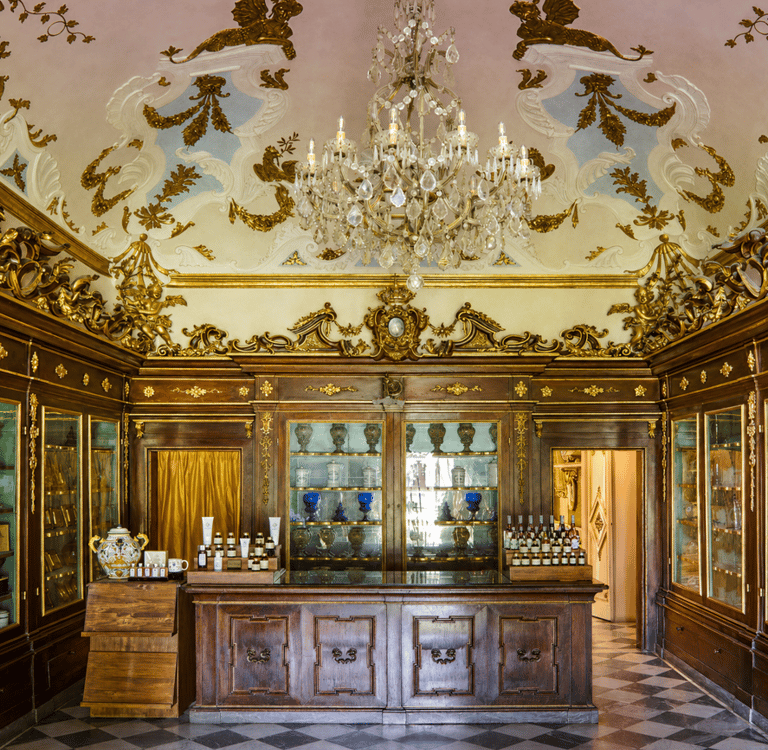
Then comes a place like no other: the Officina Profumo-Farmaceutica di Santa Maria Novella. Sweet, intense scents, antique shelves, glass bottles, formulas written in the handwriting of other centuries. It feels like a royal drawing room, a discreet museum, a workshop that never ages. Every photograph here becomes elegant on its own, effortlessly.
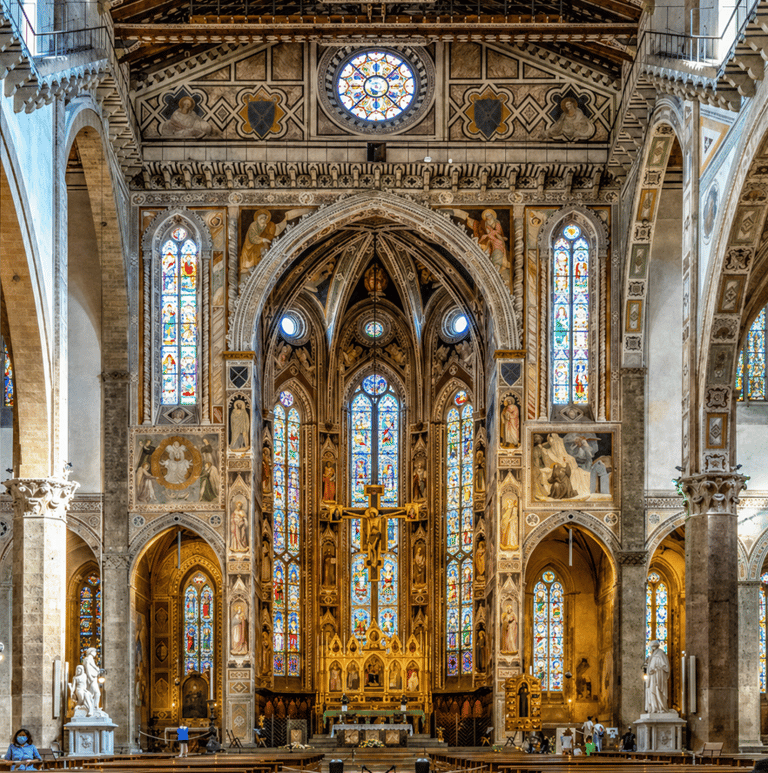
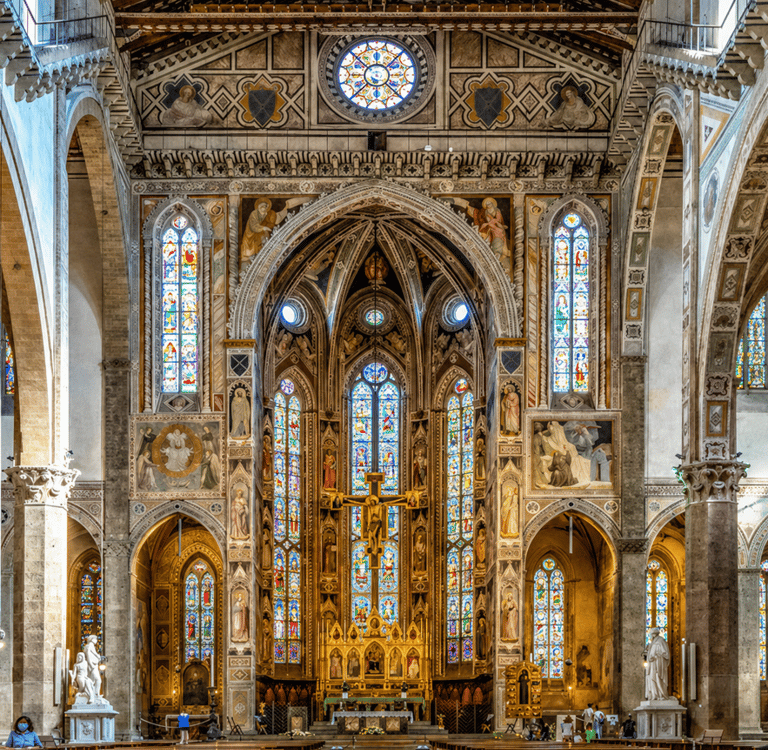
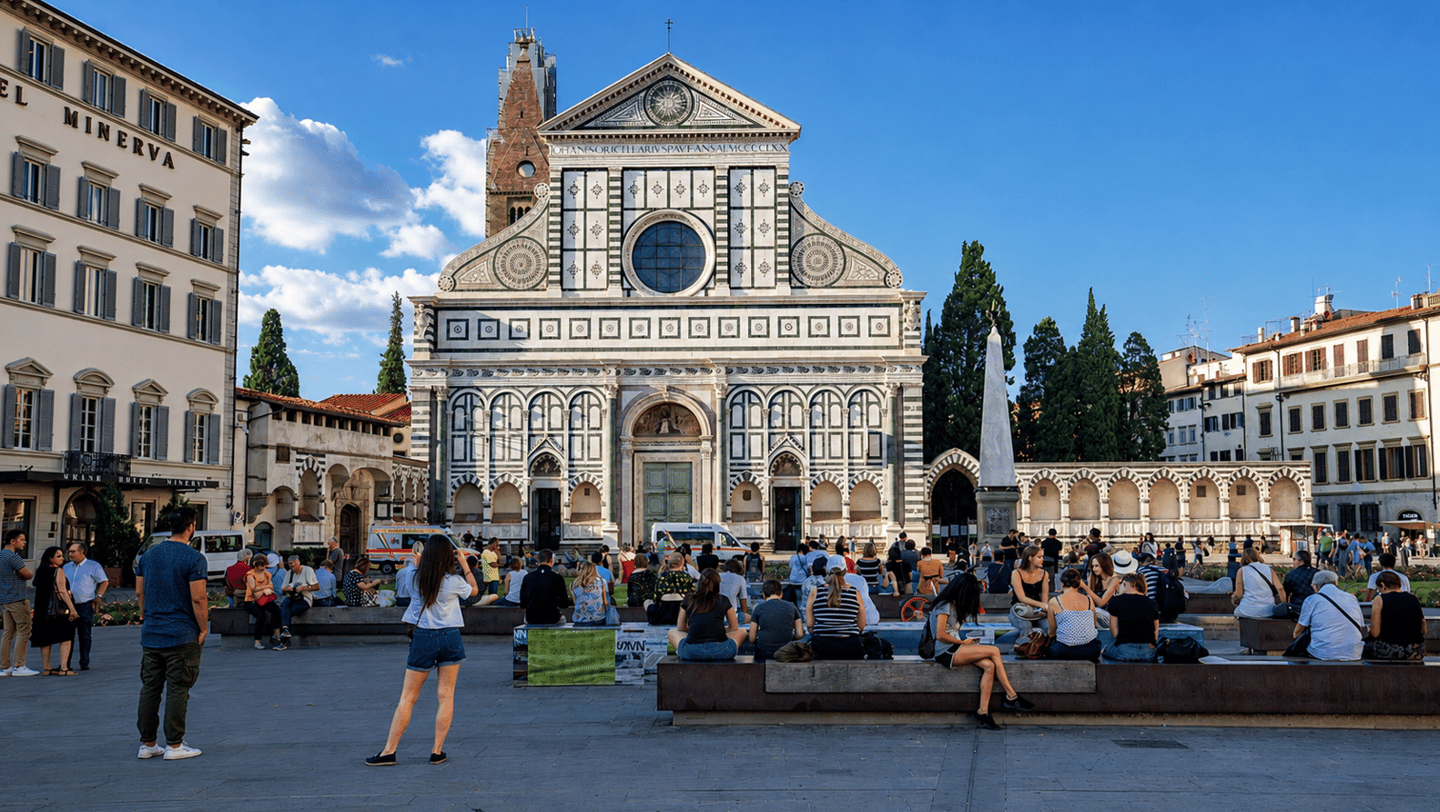
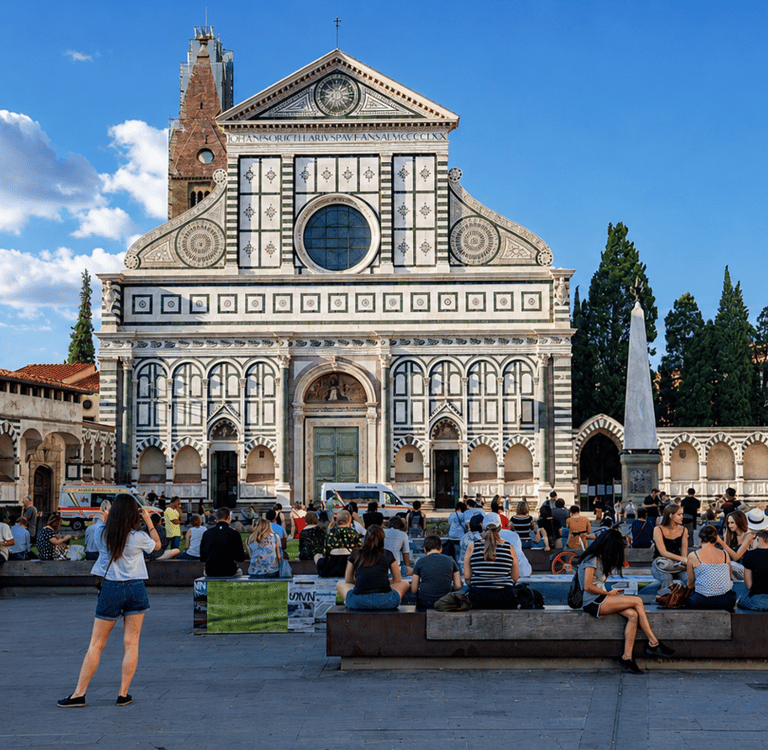
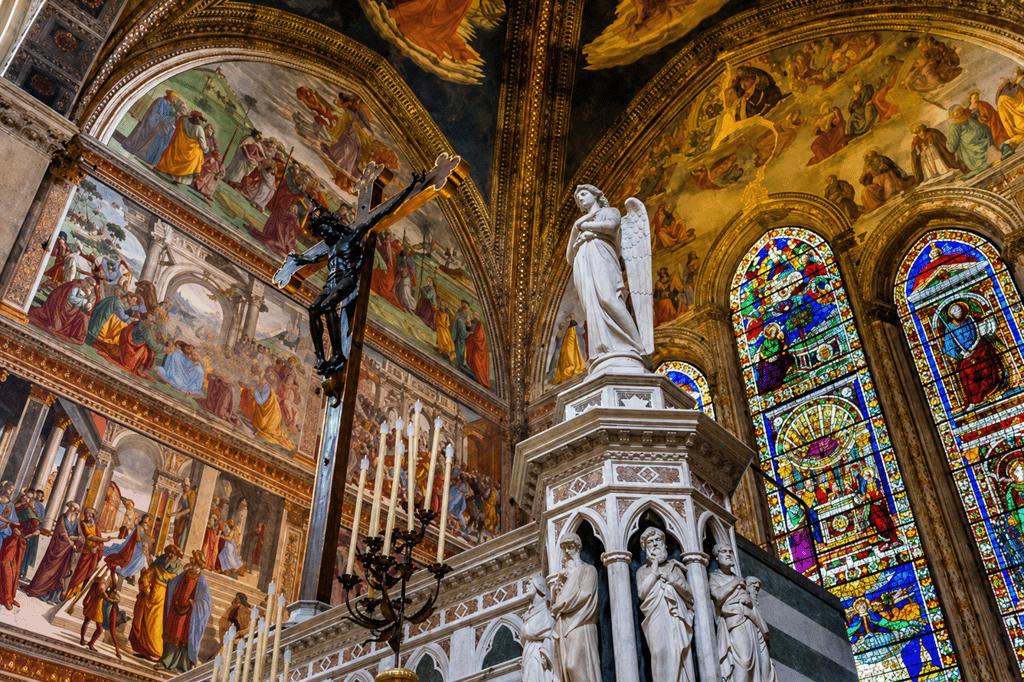
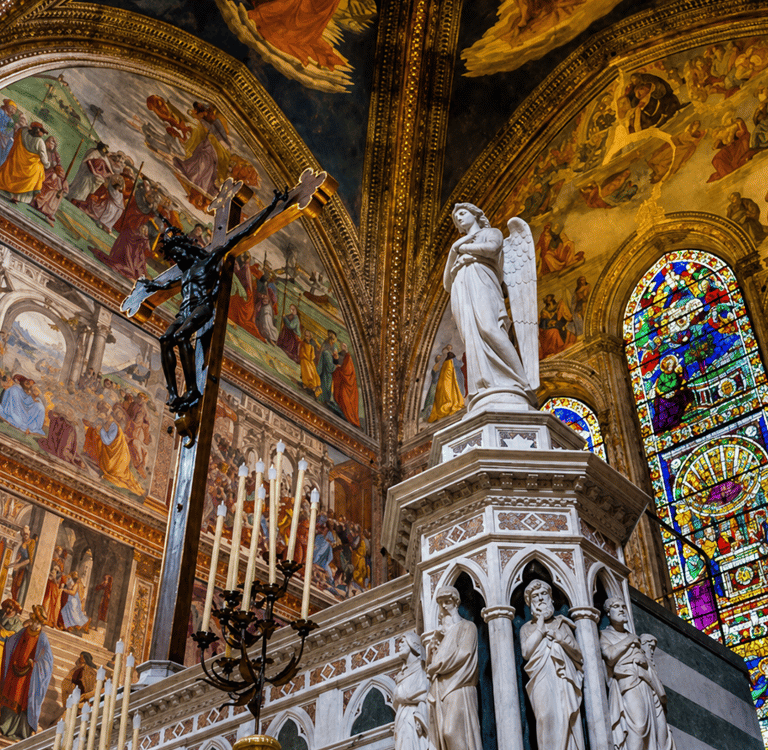
The square outside is large and bright: Santa Maria Novella opens like a geometric canvas.
Its white and green façade cuts across the sky, while the shadows of tourists stretch into long lines on the paving stones. Florence has a gift for symmetry: even people seem to move in order, as though someone were drawing them from above.
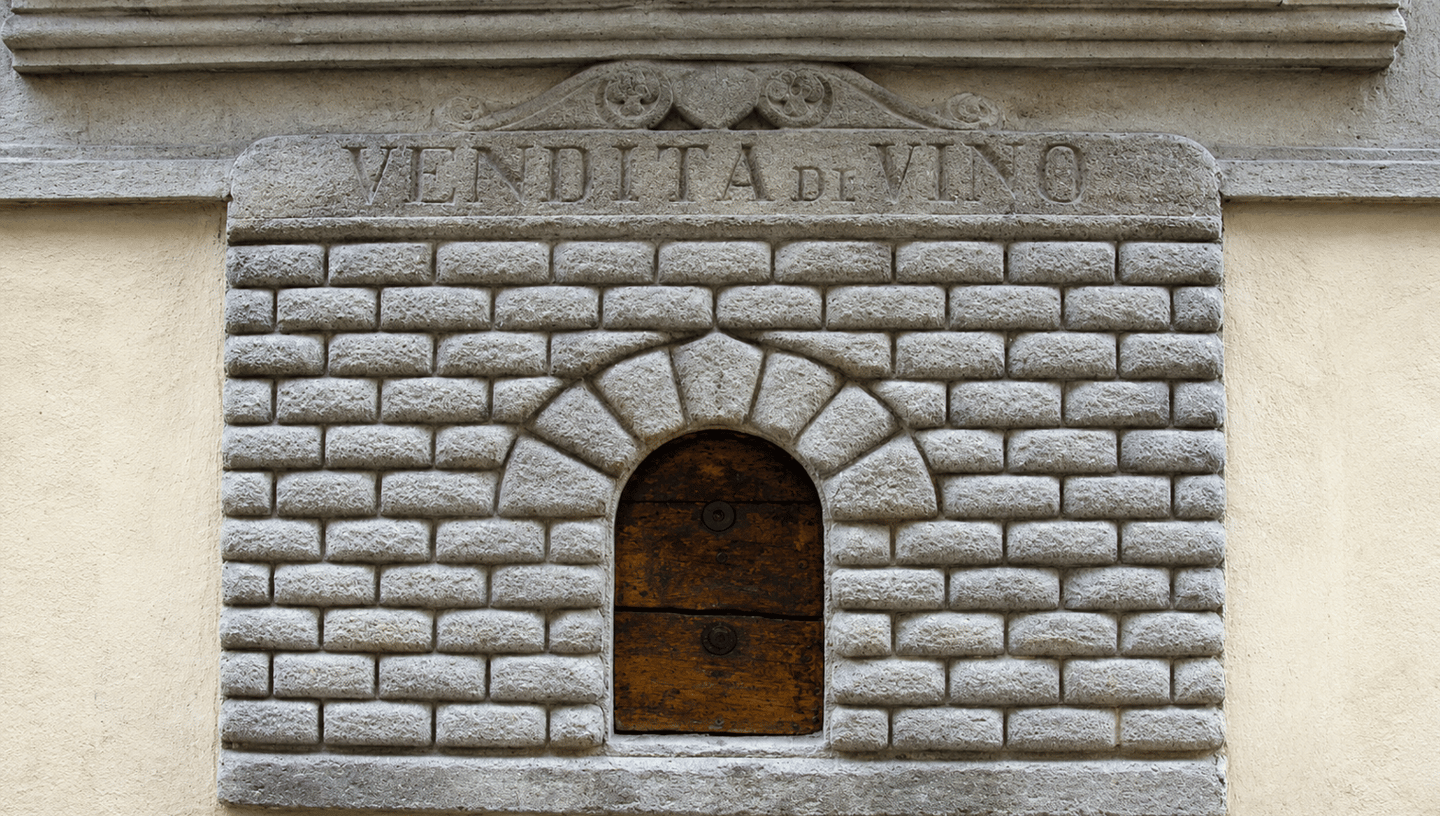
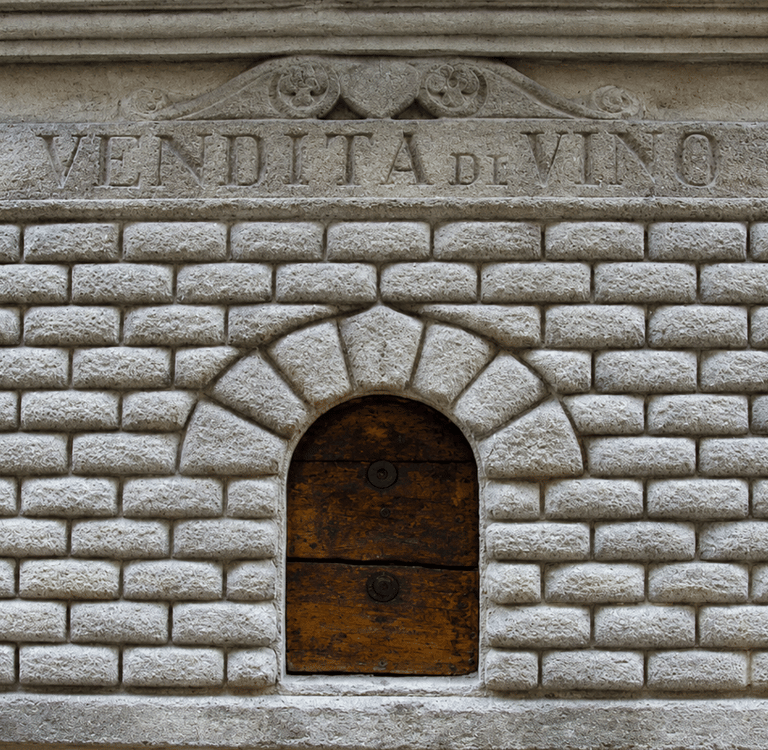
Among the lanes of the centre, you stumble upon a wine window, small enough to miss, famous enough for everyone to recognise. Some photograph it without knowing what it is, some knock on it for fun, others laugh at the tiny arch in the stone. A microscopic thing in a city of giants.
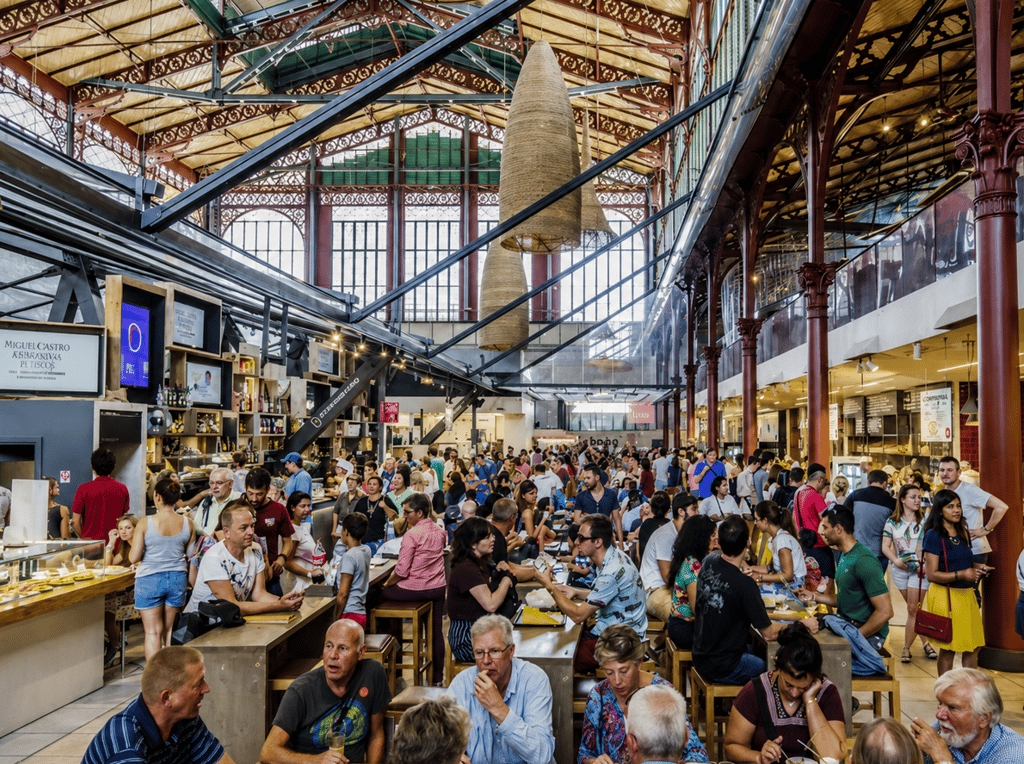
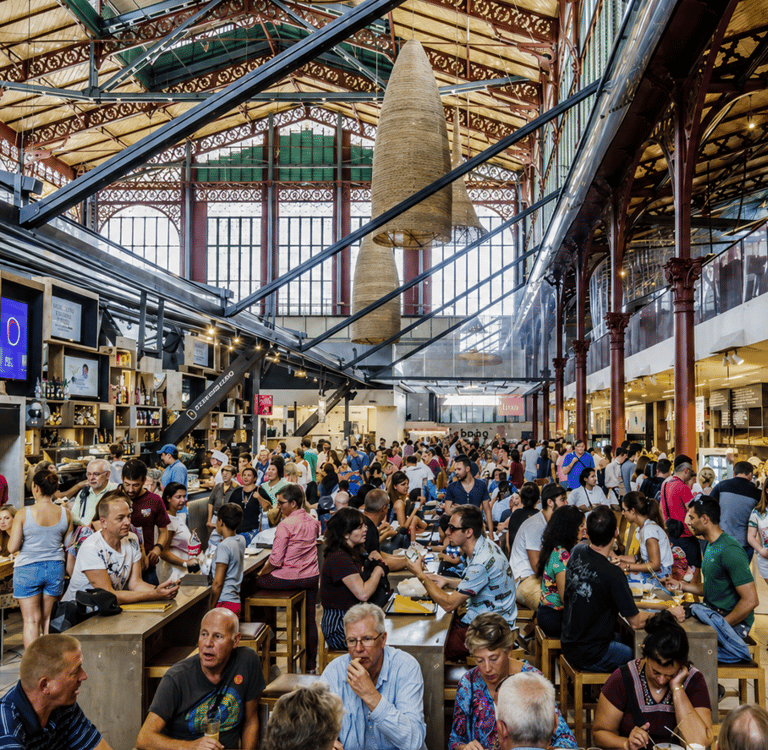
And if you follow the smell of kitchens, the street leads to the Mercato Centrale. Warm lights, fresh bread, hanging hams, steaming plates. Here photography is in the detail: blades catching the light, hands slicing, smiles serving. The city becomes food, colour, celebration.
The market calls out, noisy, full of smells and colours. Around the Basilica of San Lorenzo, among stalls and voices, the city becomes lively again, popular, authentic.
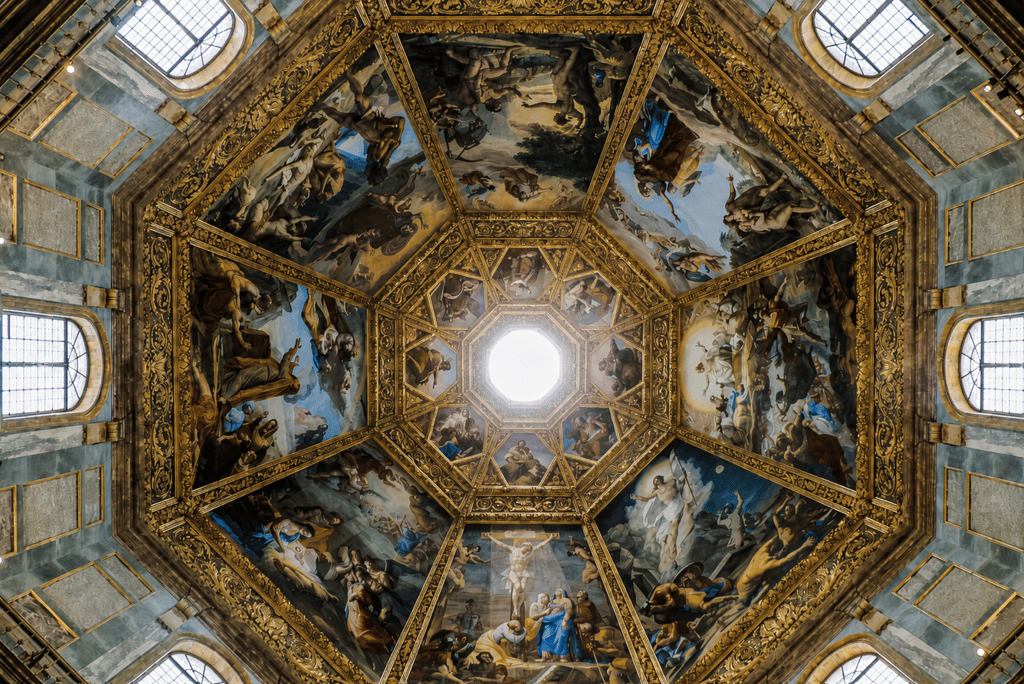
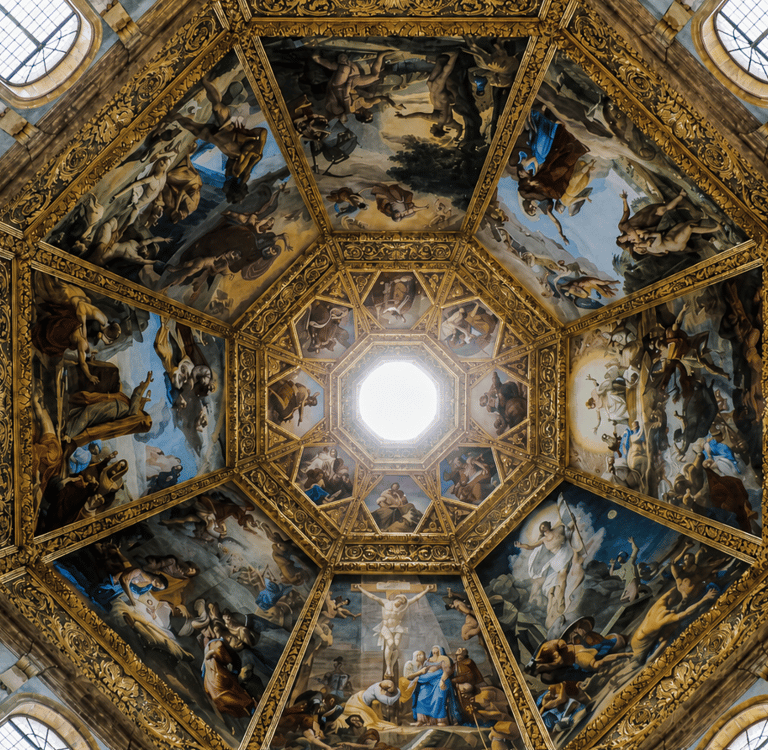
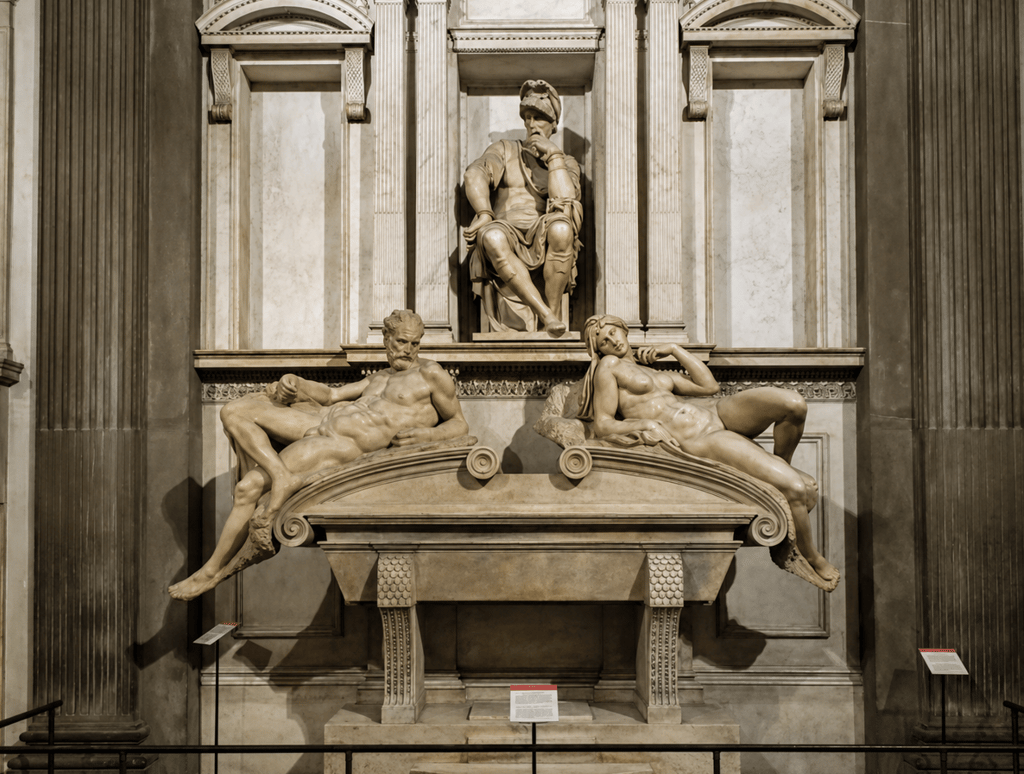
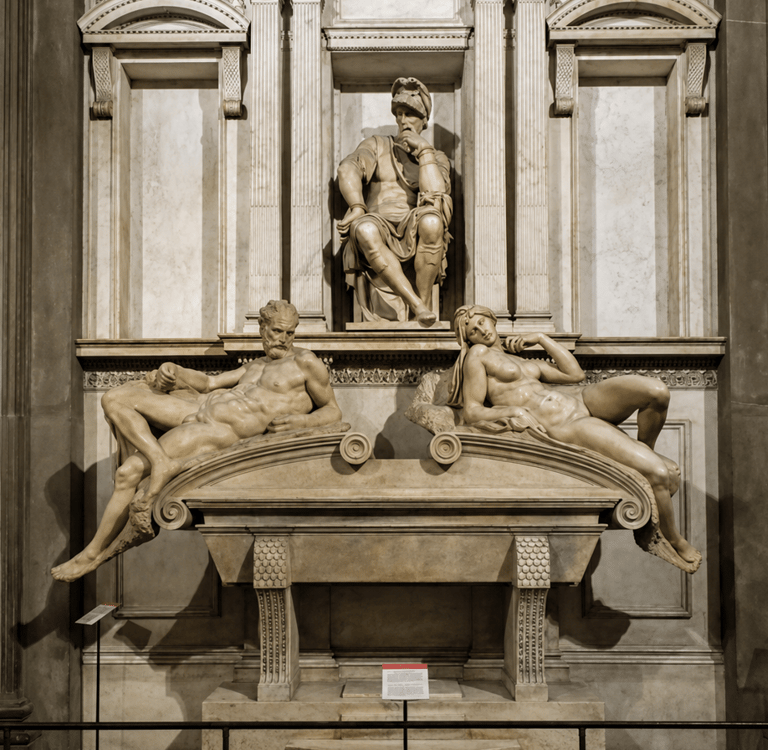
Then you only need to step into the Medici Chapels for everything to change: silence, marble, high shadows, sculptures that seem to breathe. Florence is always dual: a noisy street and a masterpiece just a few steps apart.
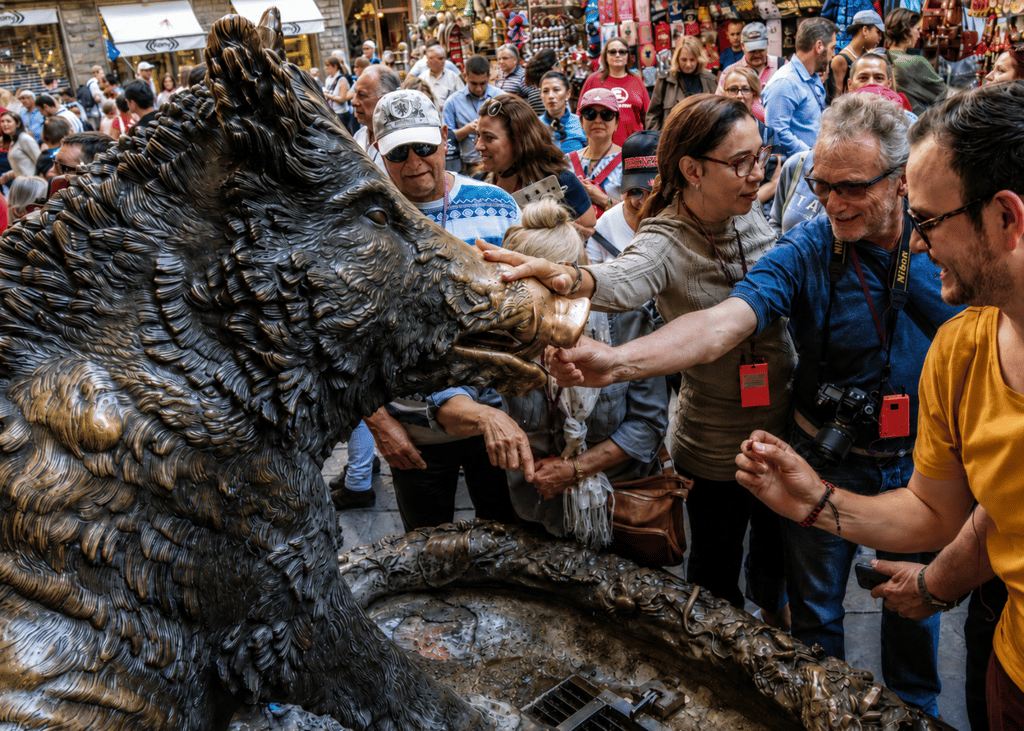
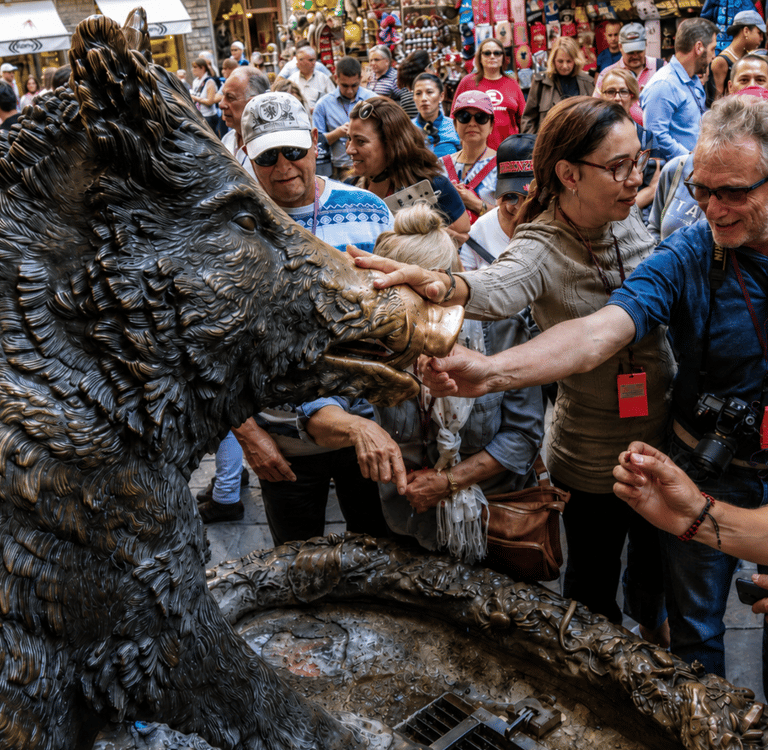
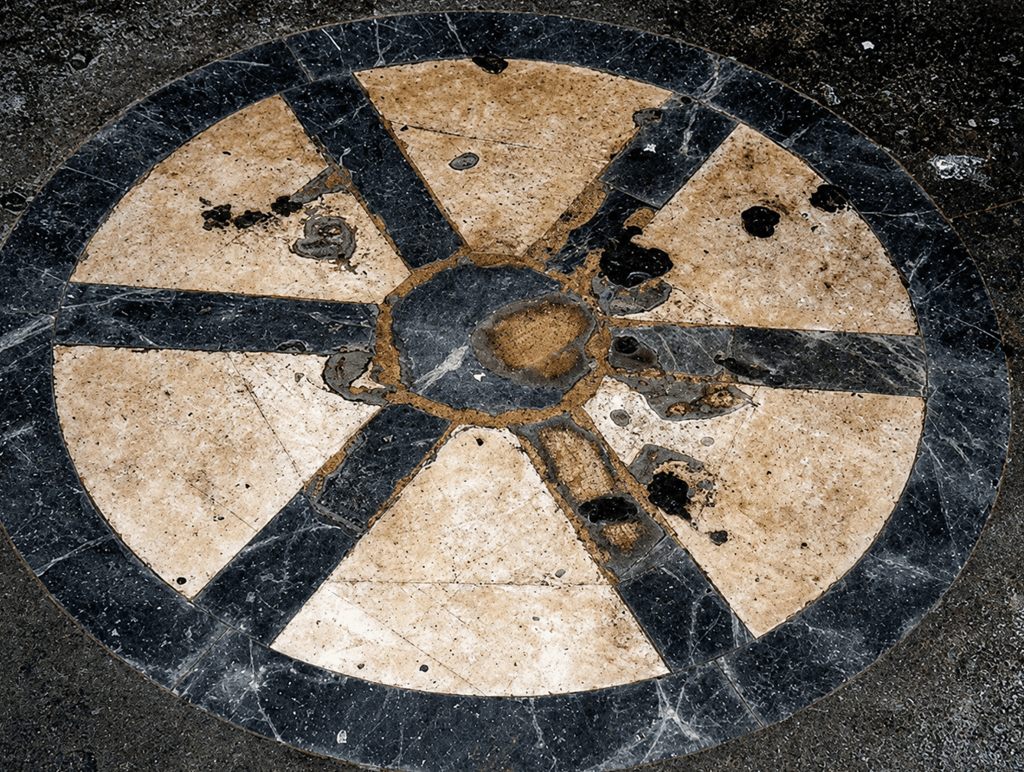
A few metres further on, the Fontana del Porcellino draws a circle of hands: touching its polished snout is a ritual, a collective gesture, an image repeated unchanged for decades. Every shot seems to capture the same moment, yet the city lives it anew every day.
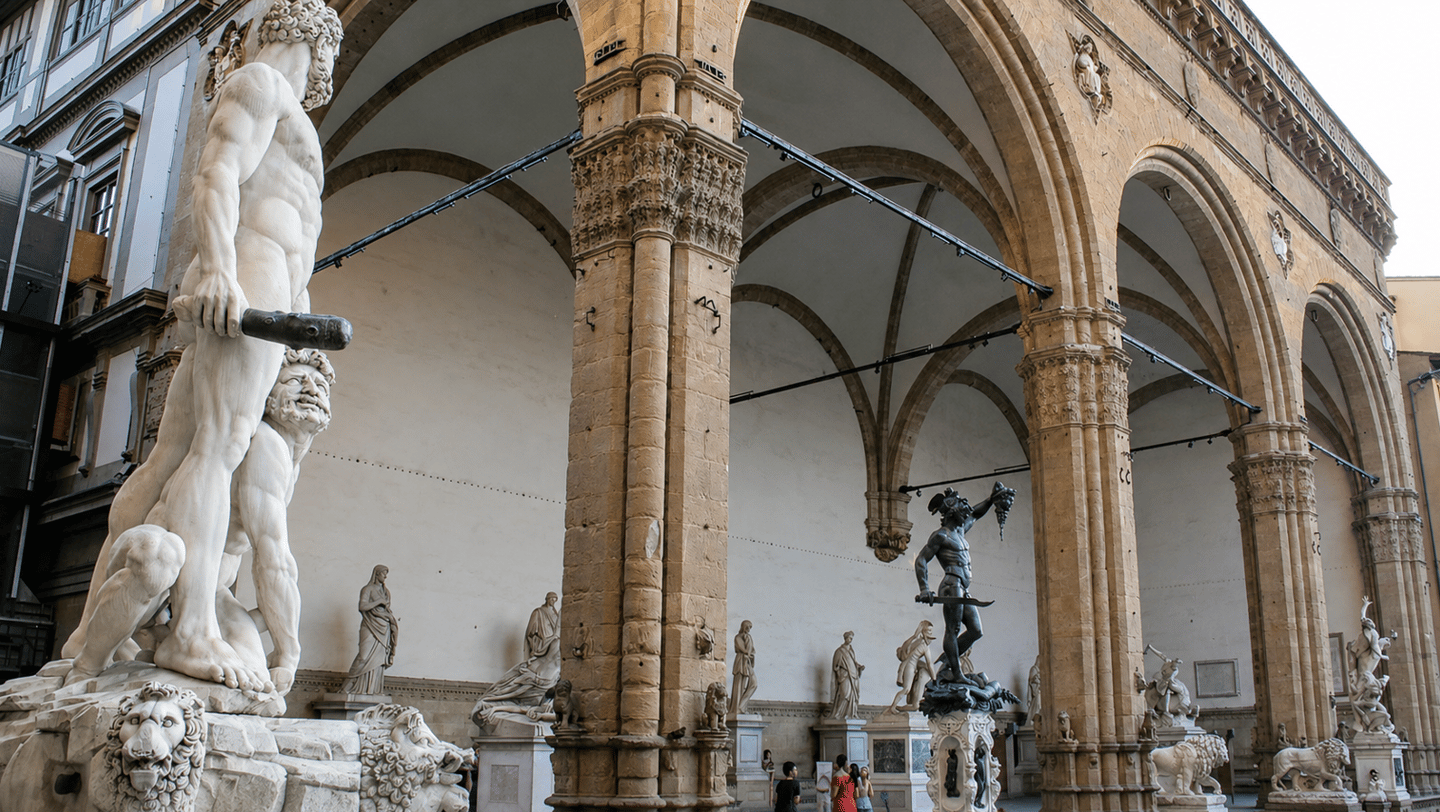
The walk continues and the stone suddenly opens out: Piazza della Signoria is a stage. Motionless statues, the shadow of the Loggia, voices, footsteps, the Pietra dello Scandalo hidden among the slabs. You sit, observe, wait. The square is a photograph in constant motion: full, overloaded, but never chaotic.
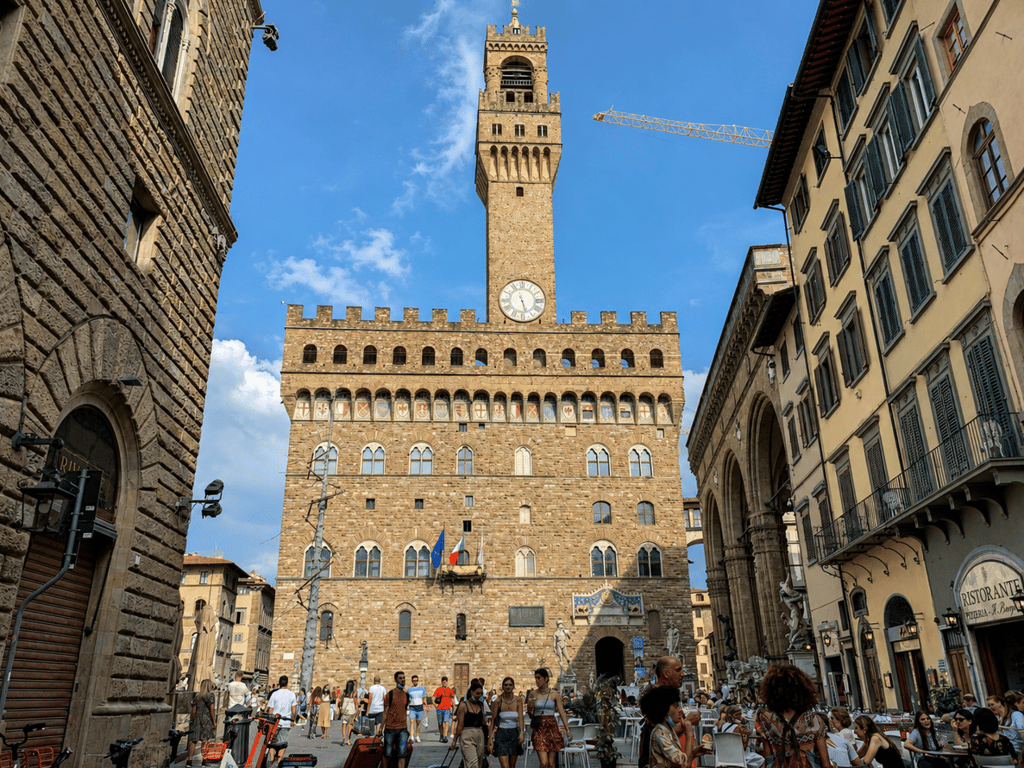
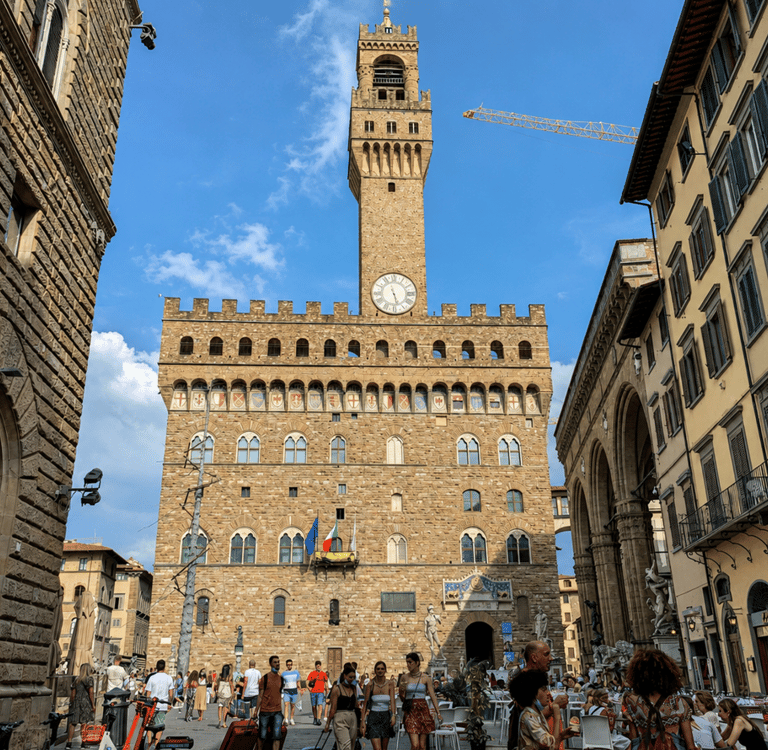
Palazzo Vecchio rises behind it all, solid and severe, with the Torre di Arnolfo cutting into the sky.
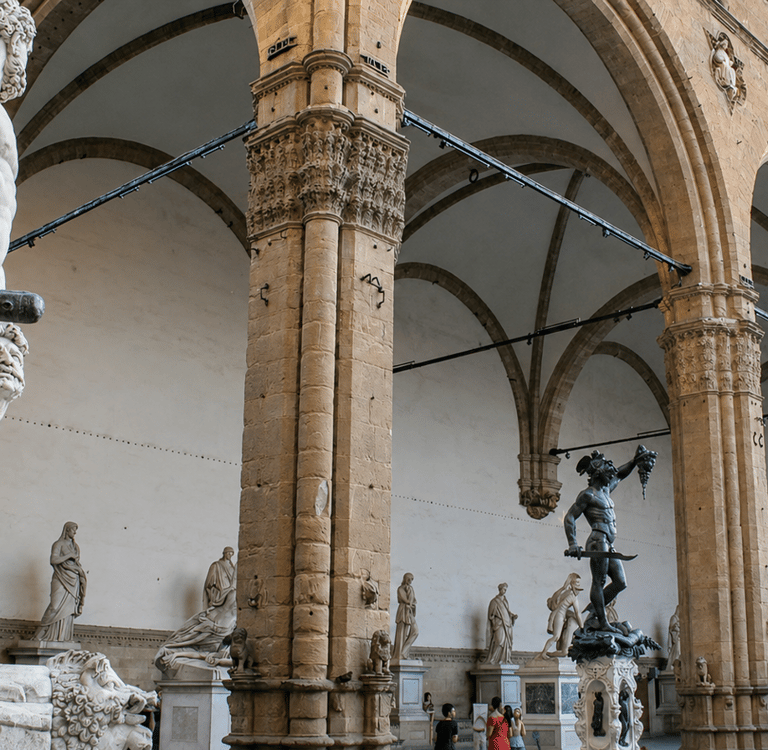
The stone loggia draws arches that look like theatrical frames, and every sculpture beneath them is lit like an actor on stage. The Loggia dei Lanzi is not a museum: it is a scene, open, alive, perfect.
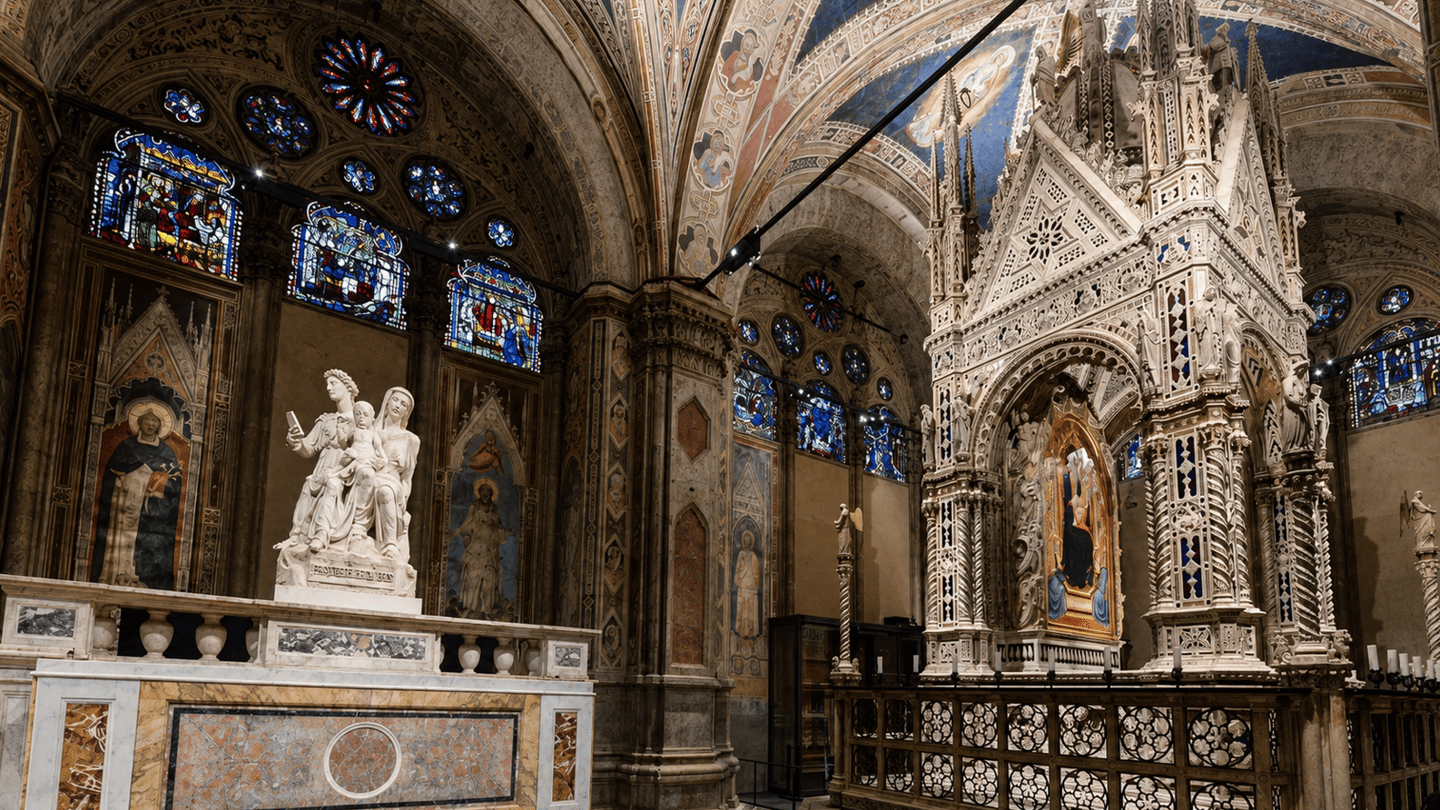
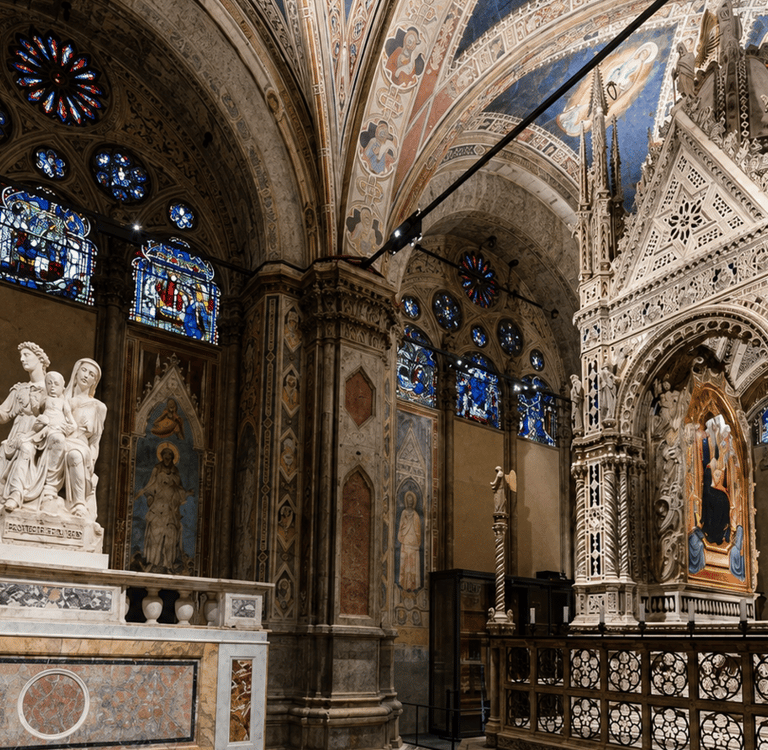
Among streets scented with stone and old workshops, Orsanmichele appears: a building that does not quite look like a church, nor quite like a palace, but something in between. The statues outside watch in silence, like guardians from another time. Inside, the silence is thicker than the darkness, and the light enters only in thin cuts, as though out of respect. Orsanmichele is a dark, deep photograph, one of those you do not take with a camera but with memory.
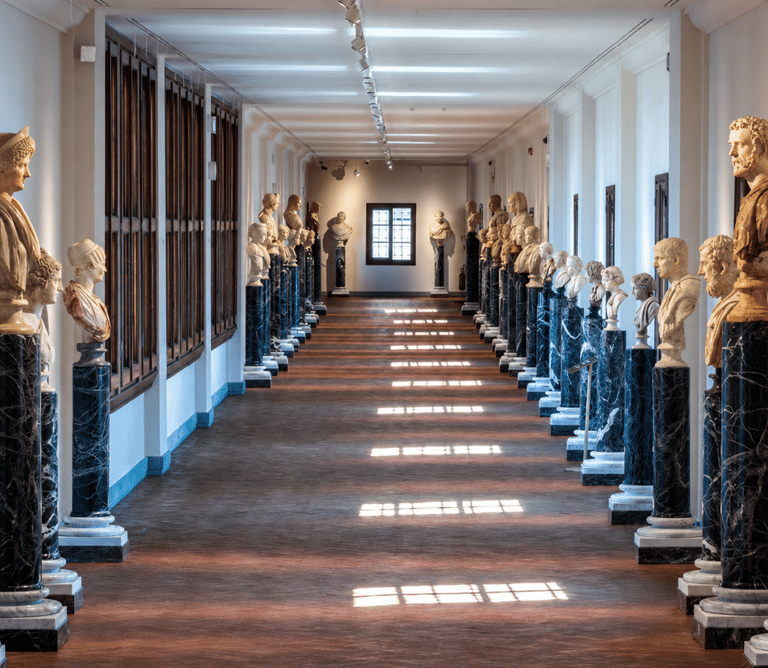
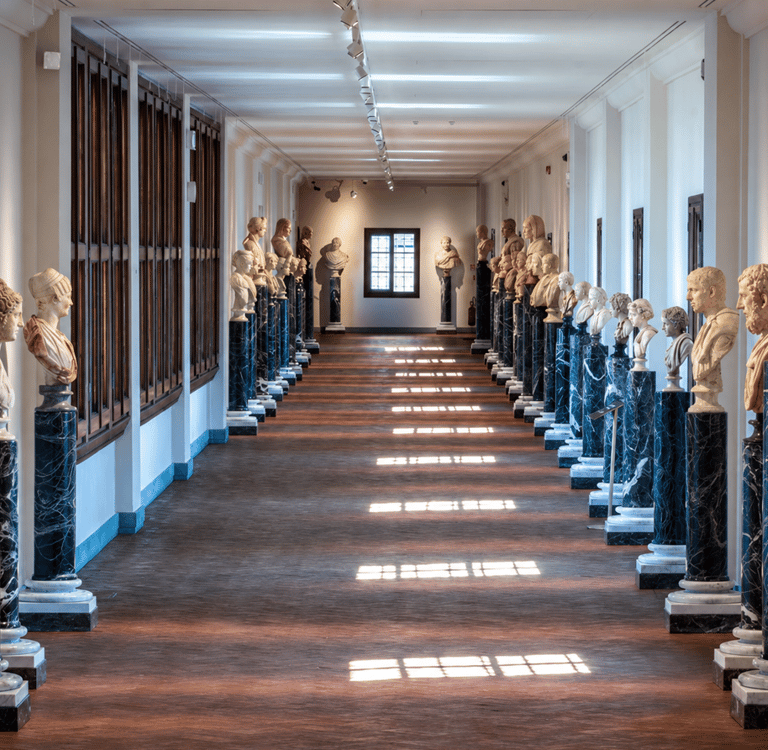
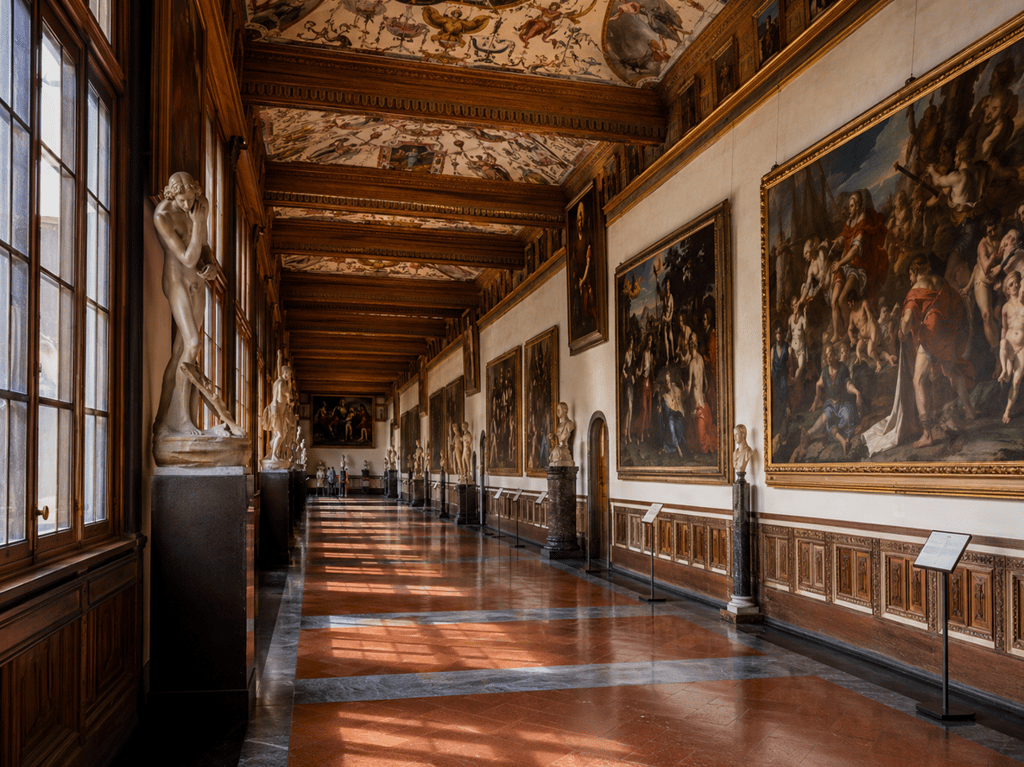
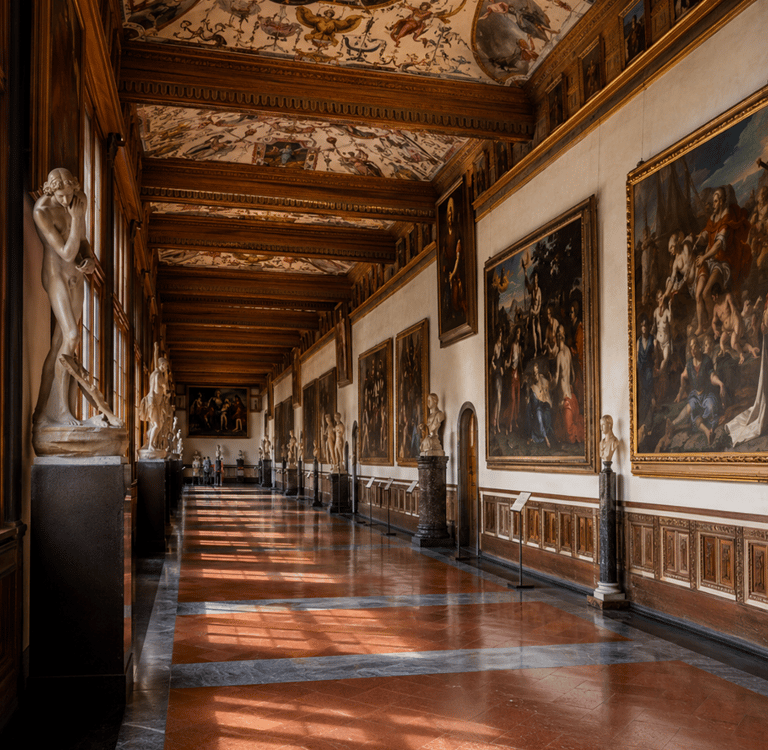
Walking towards the river, the street becomes windier, wider, more fluid, and the Uffizi Gallery appears like an endless corridor between columns and arches. People move through it like a slow procession, all heading towards the Arno.
Above, almost invisible, runs the Vasari Corridor, a suspended thread linking palaces and centuries.
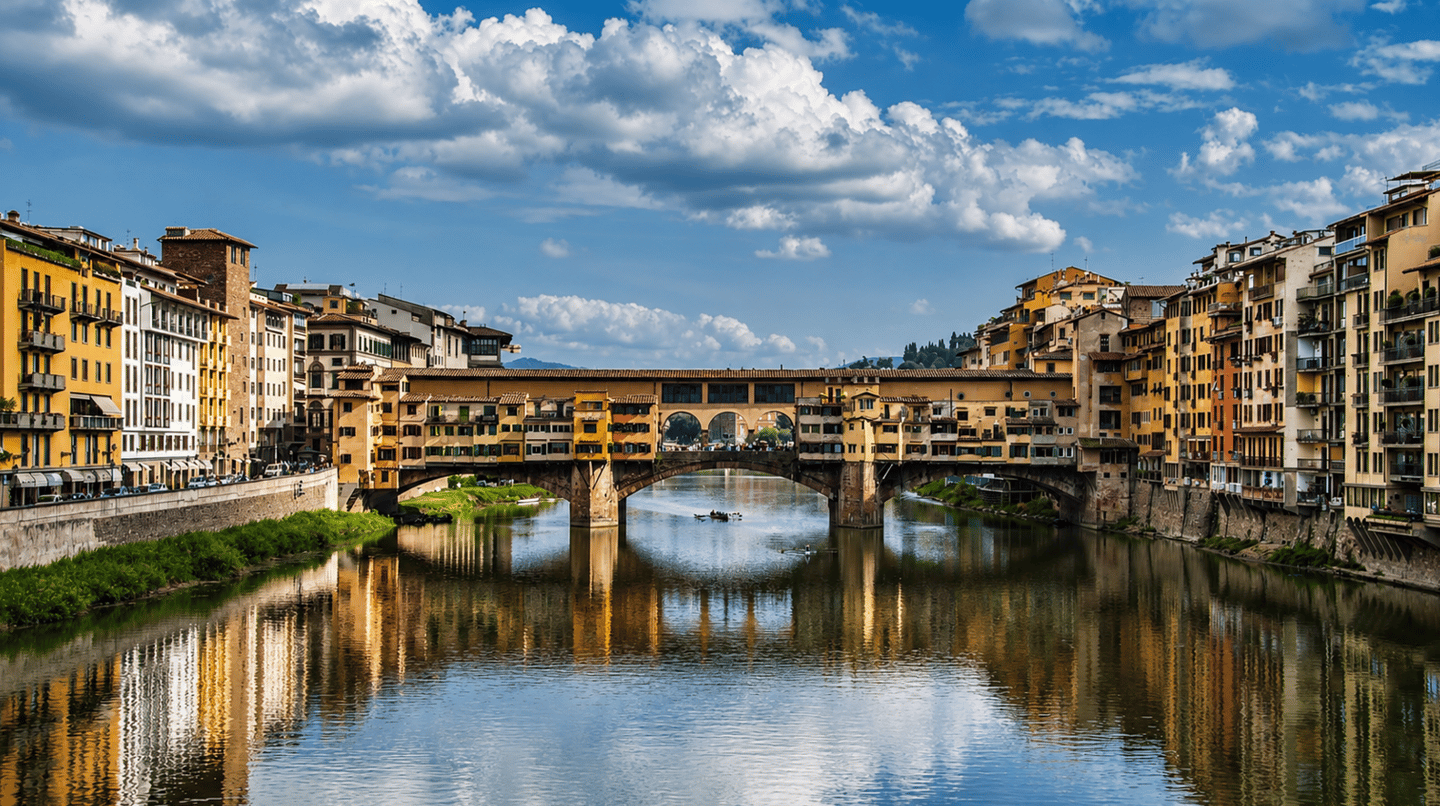
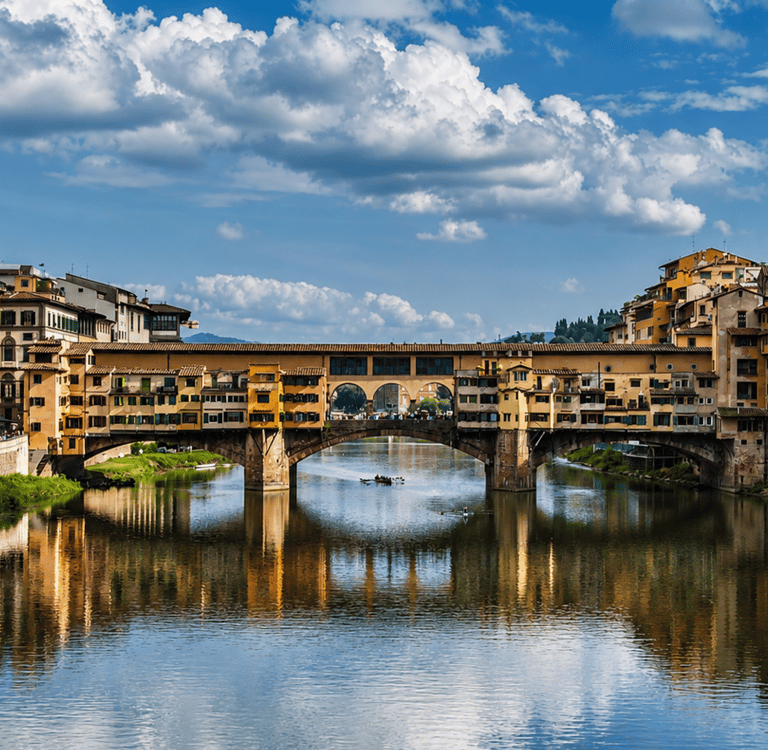
And then the water. The Arno glows, reflects, opens up the space.
Ponte Vecchio stretches out like a smile made of coloured houses: suspended workshops, small windows, yellow lights as the sun goes down. Here every sunset is irresistible; everyone takes out a camera, but no one can ever truly take the magic away with them.
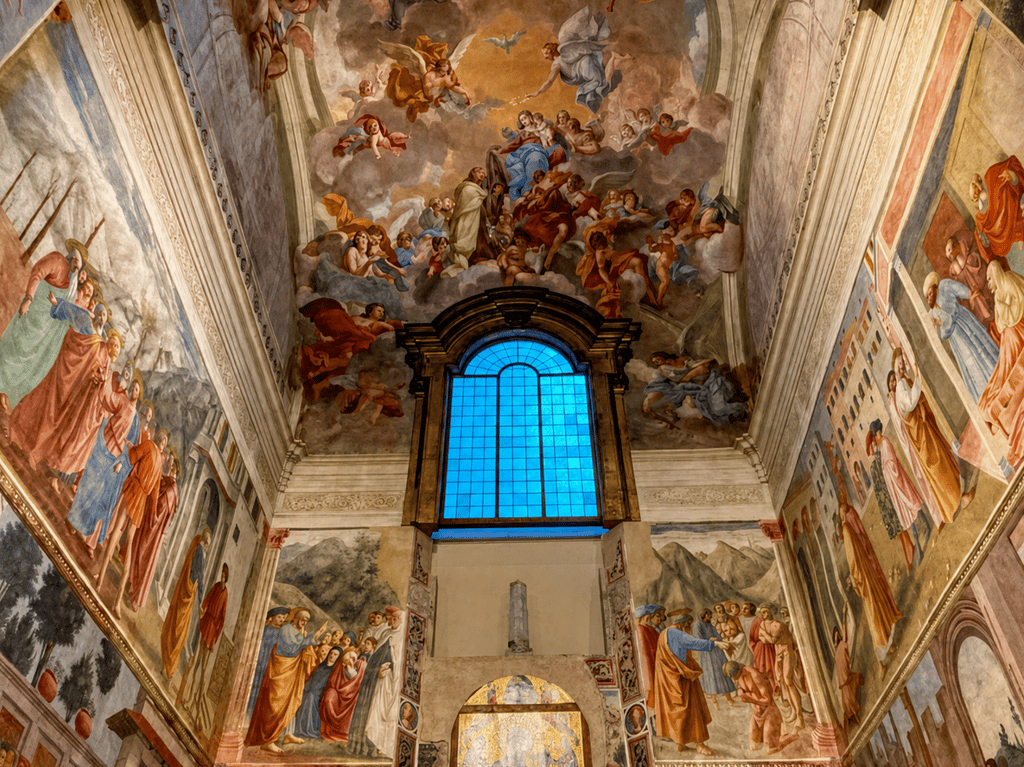
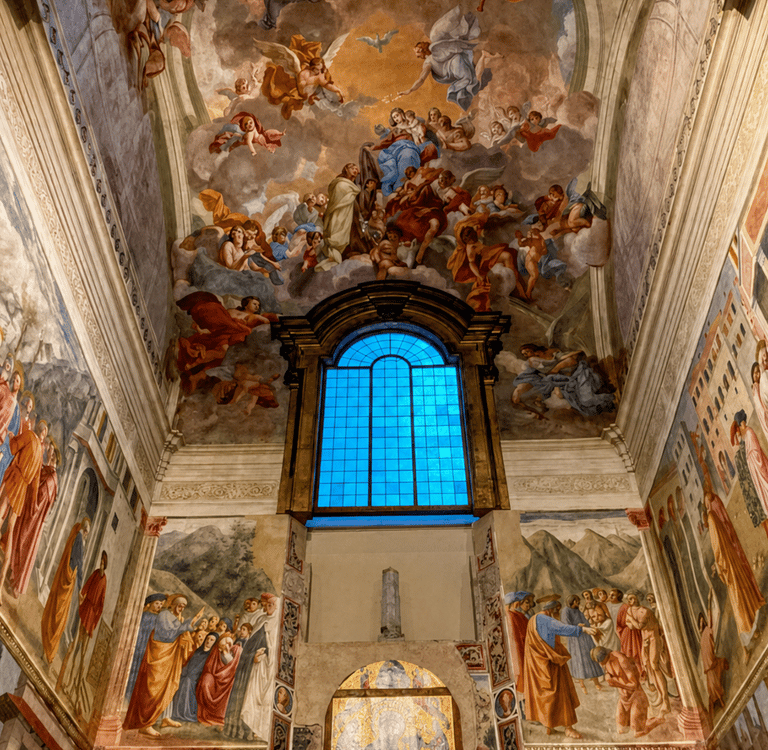
On the other side of the river, another world. The neighbourhood changes rhythm: quiet little streets, rough stone, workshops with old signs. At the heart of this maze is the Brancacci Chapel, where the paint seems to have only just been laid down, still damp, still alive. An intimate place that speaks softly.
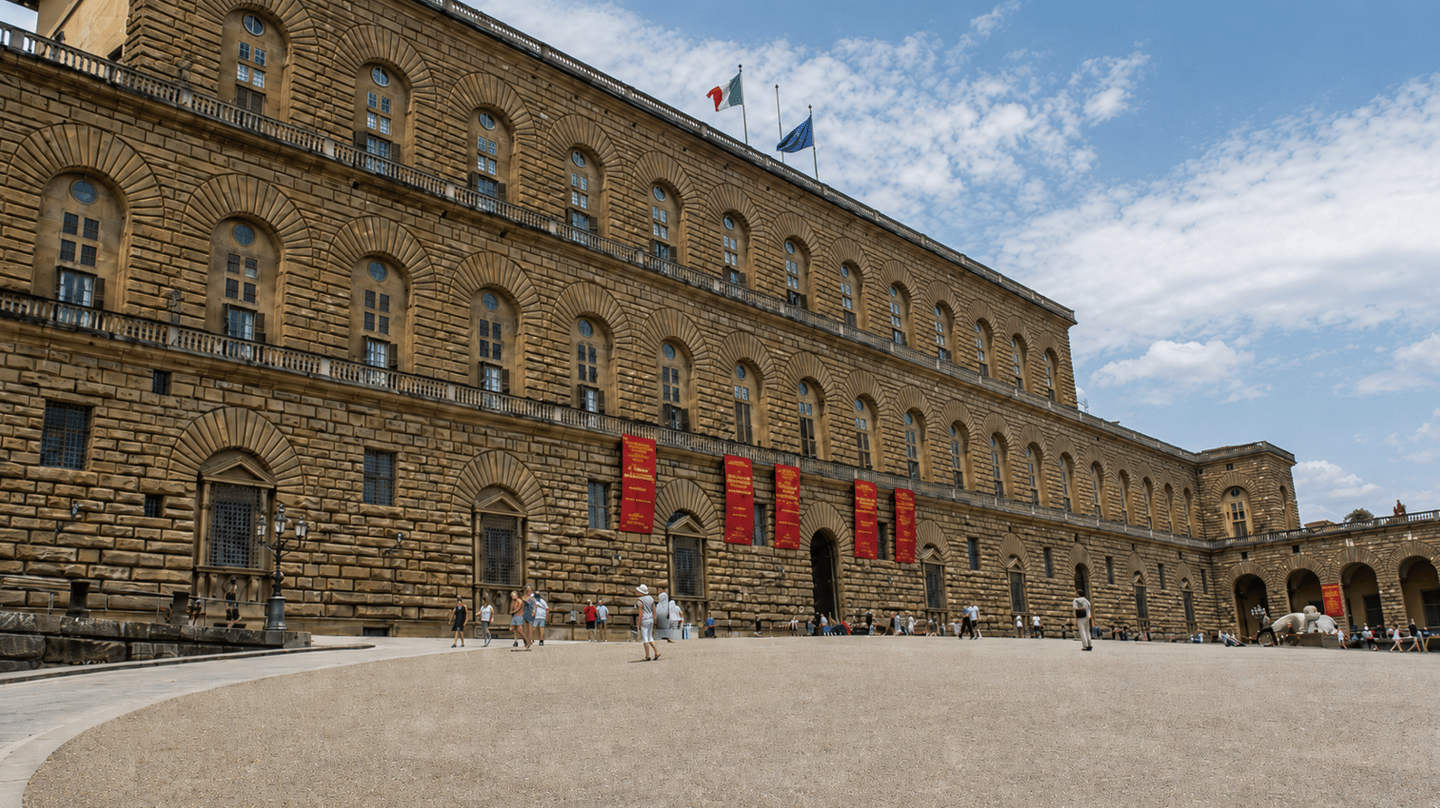
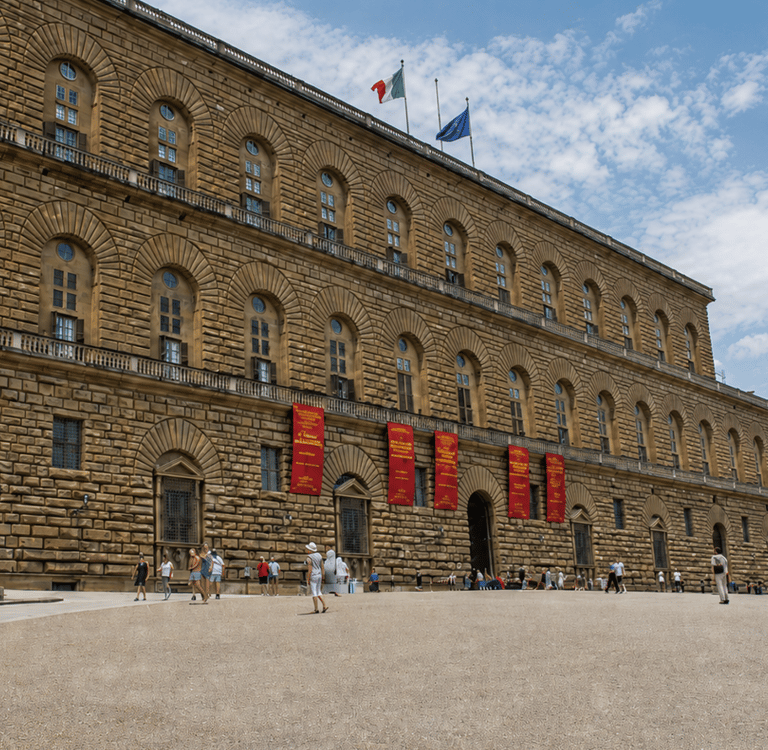
A few steps on, Palazzo Pitti rises before the square: enormous, severe, almost cyclopean. Its stones look like tense muscles, its façade like a wall without end. The inner courtyard is a theatre, and here the city seems to breathe differently — slower, more regal.
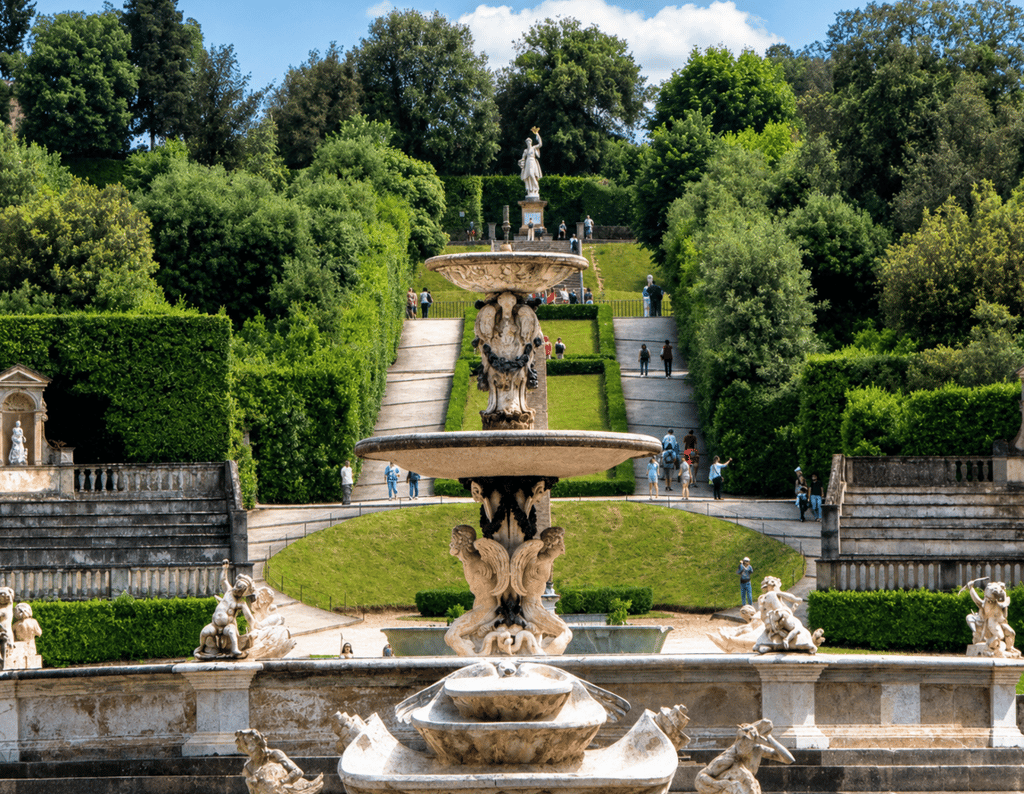
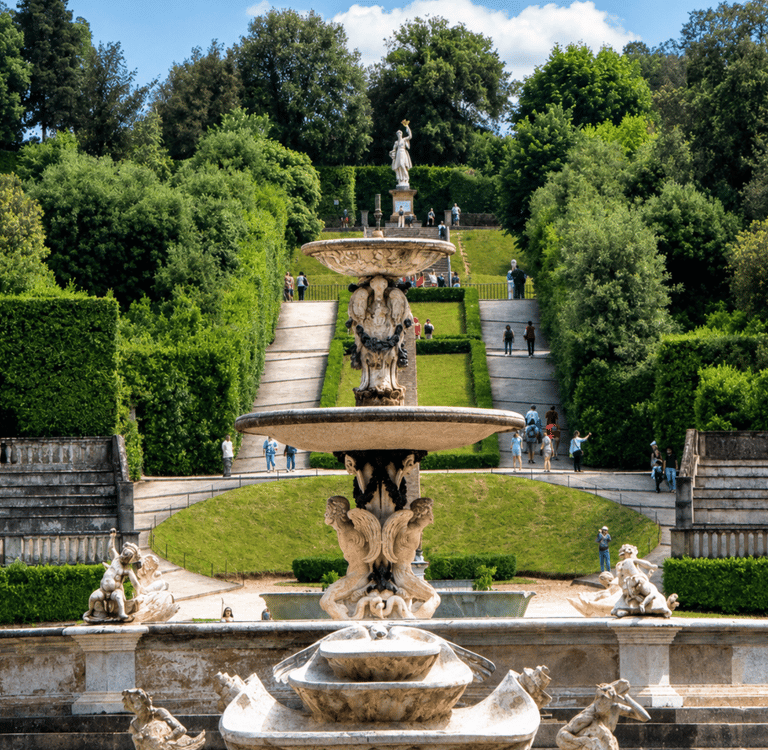
Behind the palace, like a hidden world, the Boboli Gardens open up. Broad avenues, tall hedges, ancient statues, fountains that seem to be waiting for someone. It is a green labyrinth where Florence no longer speaks in stone, but in leaves and wind. Every bench is an invitation, every terrace a painting of the sky. Here the city takes off its crown and puts on something simple: green, silent, immense. Boboli is a breath.
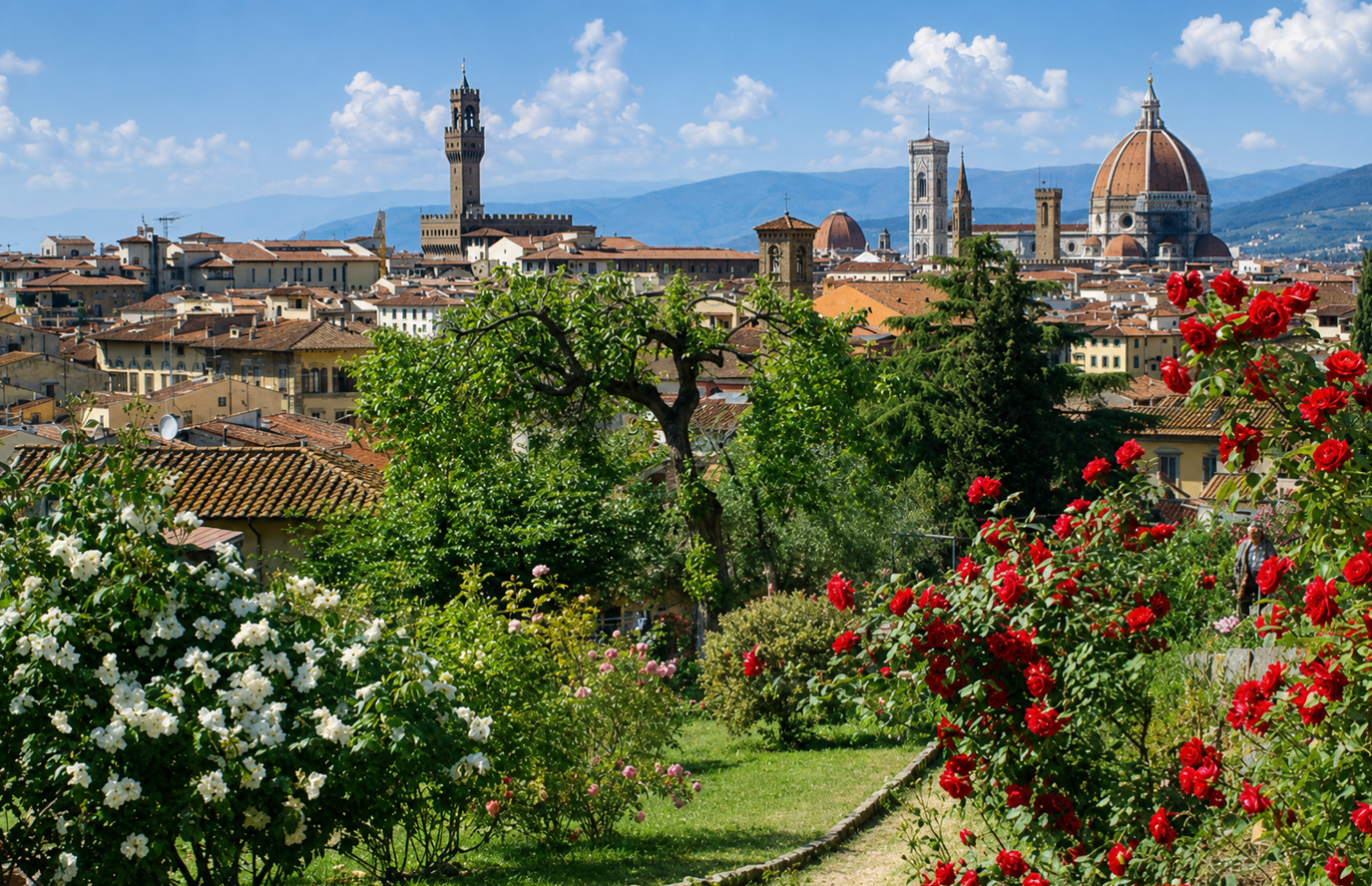
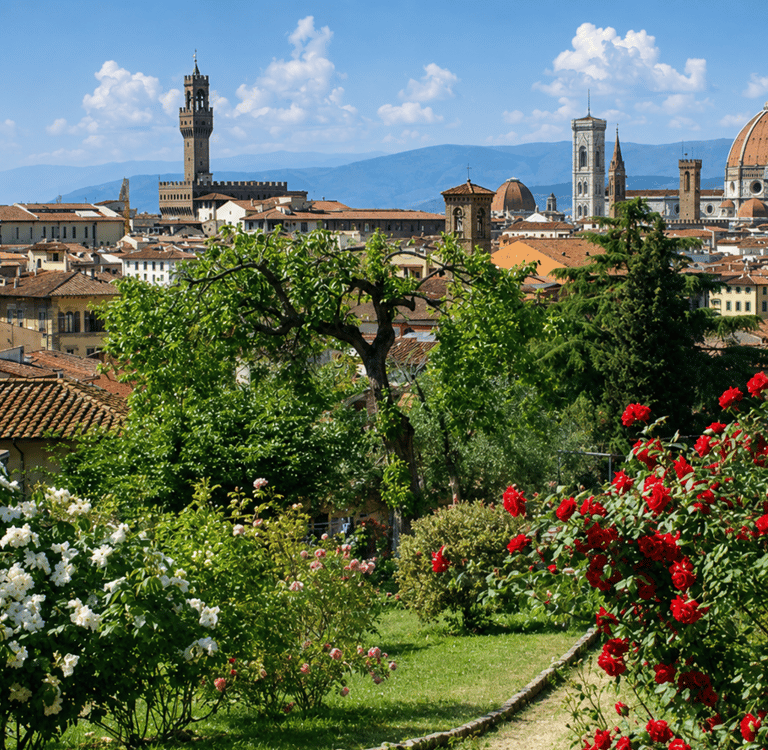
Behind it, the greenery opens like a curtain into the Rose Garden. Cats stretched out in the sun, a sweet scent in the air, benches looking down over the Arno. It is one of those places where Florence stops speaking and lets itself be looked at. A natural frame that feels made for those in search of silence.
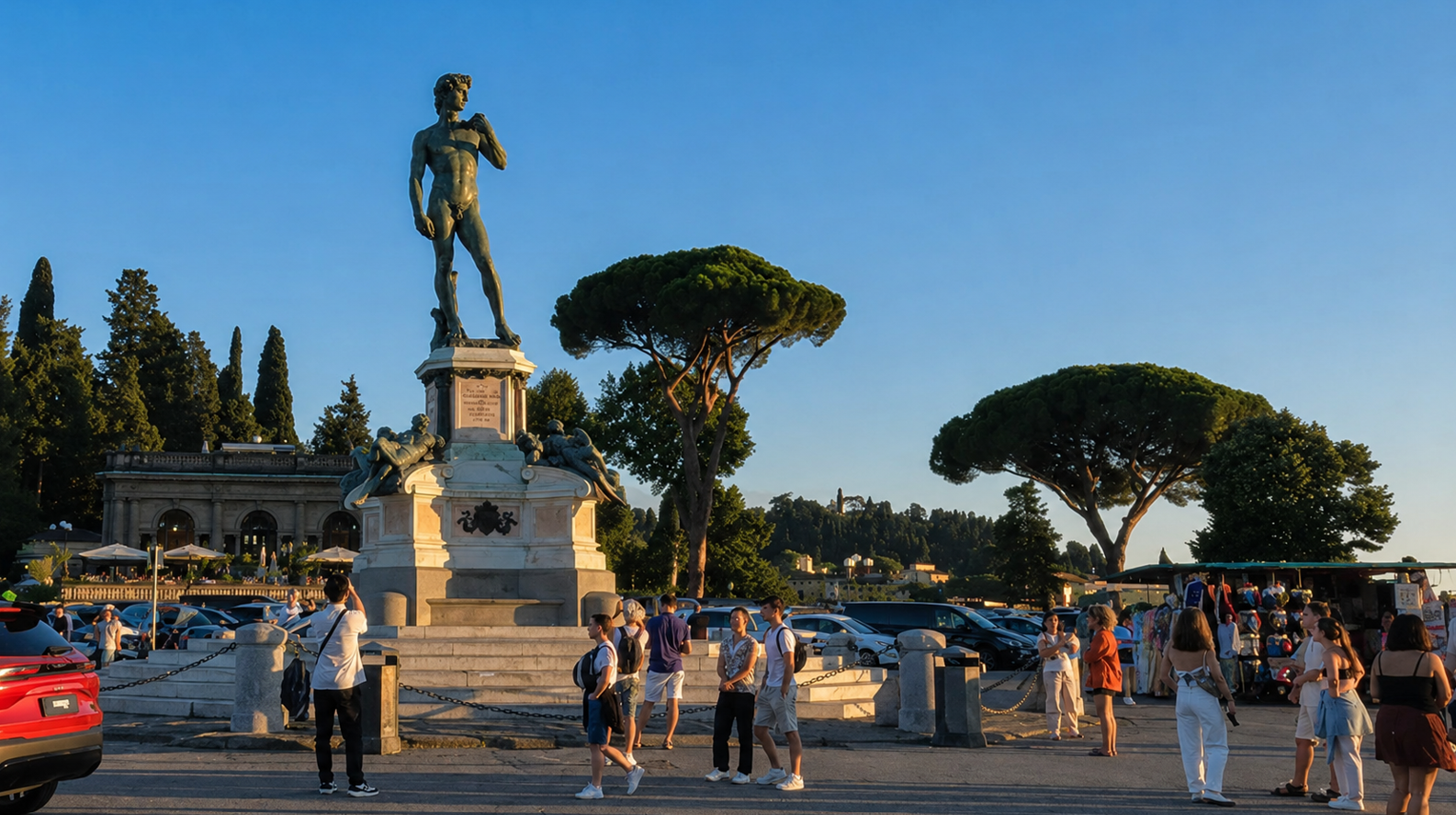
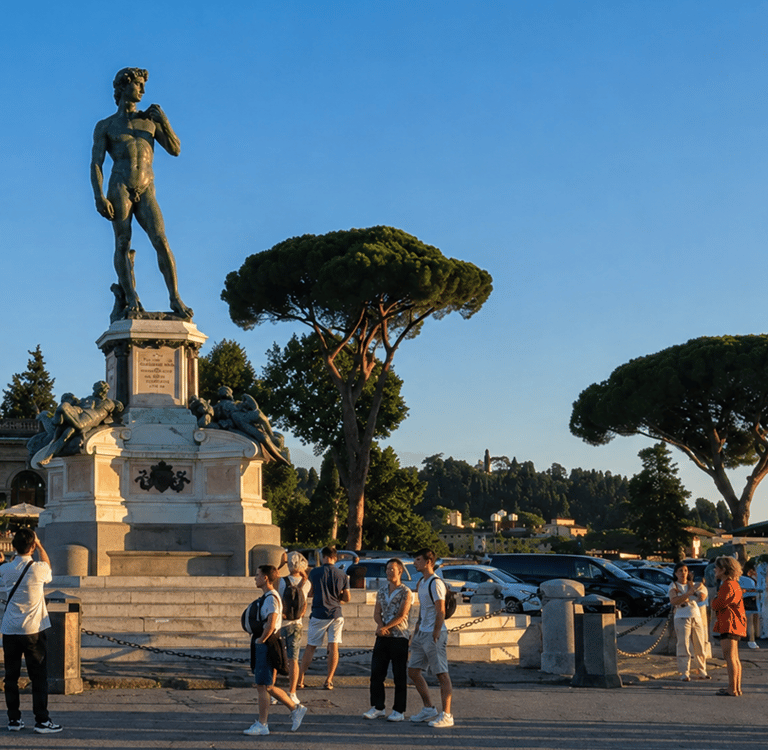
Then comes the great terrace of Piazzale Michelangelo, where every day hundreds of people wait for the same photograph: the whole city, spread out like a map of stone and red roofs. At sunset, everything lights up with gold. It does not matter how many times it has been photographed: every evening feels like the first.
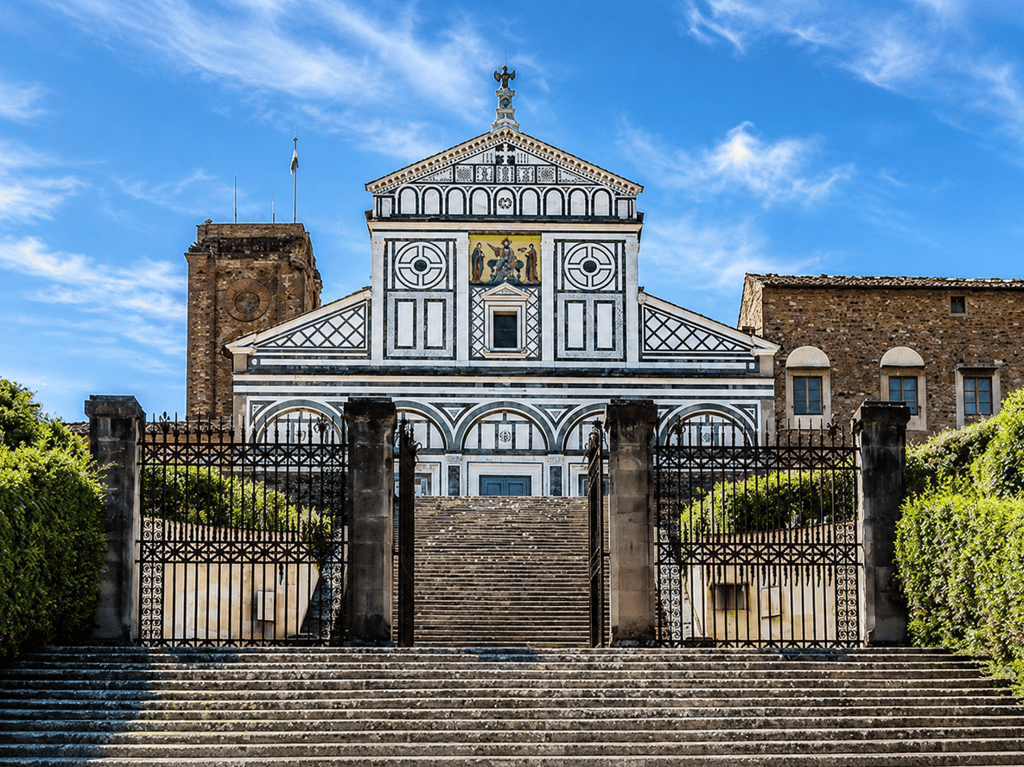
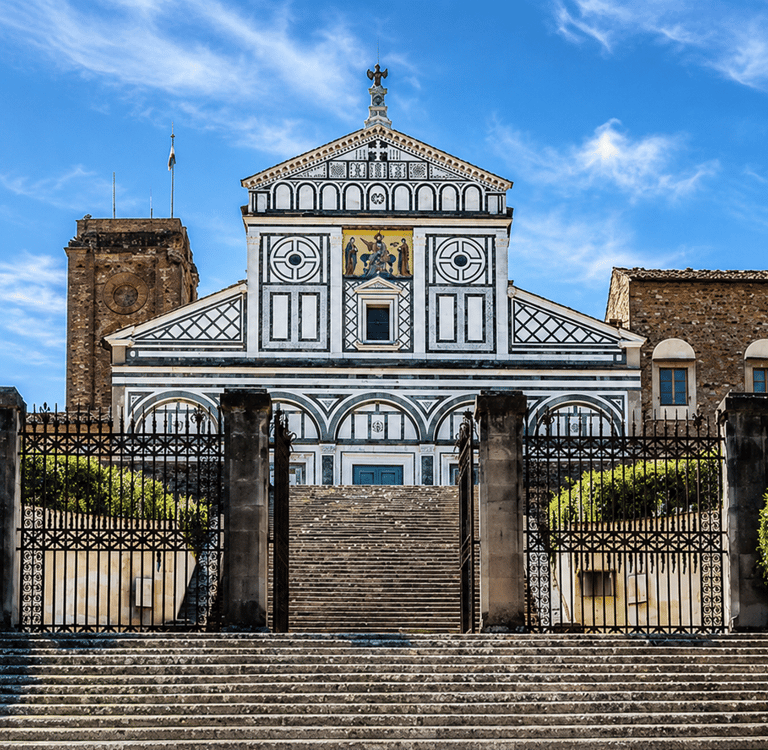
But the highest point is not the square. A few steps more, and the stairs lead to the Basilica of San Miniato al Monte.
Here, the noise disappears.
The façade shines in the sun, white and green like a jewel.
From up here, Florence no longer looks like a city: it is a painting, still, infinite, motionless in all its perfection.
And in the end, you realise the city has been one long photograph.
Not chapters, not stops, not a list of monuments: one single moving image, where everything connects to everything else, like a film without editing.
Florence does not ask to be understood: it asks to be looked at.
If this visual diary has made you want to leave, get your camera ready and experience Florence with your eyes, not just through itineraries.
Walk, lose your way, follow the light: the city will do the rest.
BUT…
Let’s say it with a smile — bitter, but elegant, like Florence:
– the monuments cost more than a wedding;
– a coffee can come with the same price tag as a Brunello;
– and some staff seem convinced that tourists are a nuisance to be endured, rather than guests to be welcomed.
Maybe it is the beauty, maybe the sheer number of visitors, maybe the fact that thousands of people pass through every day… but the city often forgets how to be kind.
And yet — this is the truth — Florence remains unmissable.
It may be expensive, it may be a little snobbish, it may be tired of those who invade it every day… but it is so beautiful that you forgive it everything.
Let us know what you think
Leave a comment
Social Link
Follow us on our social channels
Instagram, Facebook e TikTok
ContaCTS
Newsletter
© Copyright 2026 - Zaino in Due