

Wizz Air brings Starlink Wi-Fi to low-cost flights: from 2027, high-speed internet above the clouds
Wizz Air will introduce Starlink Wi-Fi on its flights from 2027: a game changer for low-cost travellers and for anyone who works, creates content or stays connected even at cruising altitude.
NEWS
Rebecca P. & Raffaele F.
6/11/20265 min read
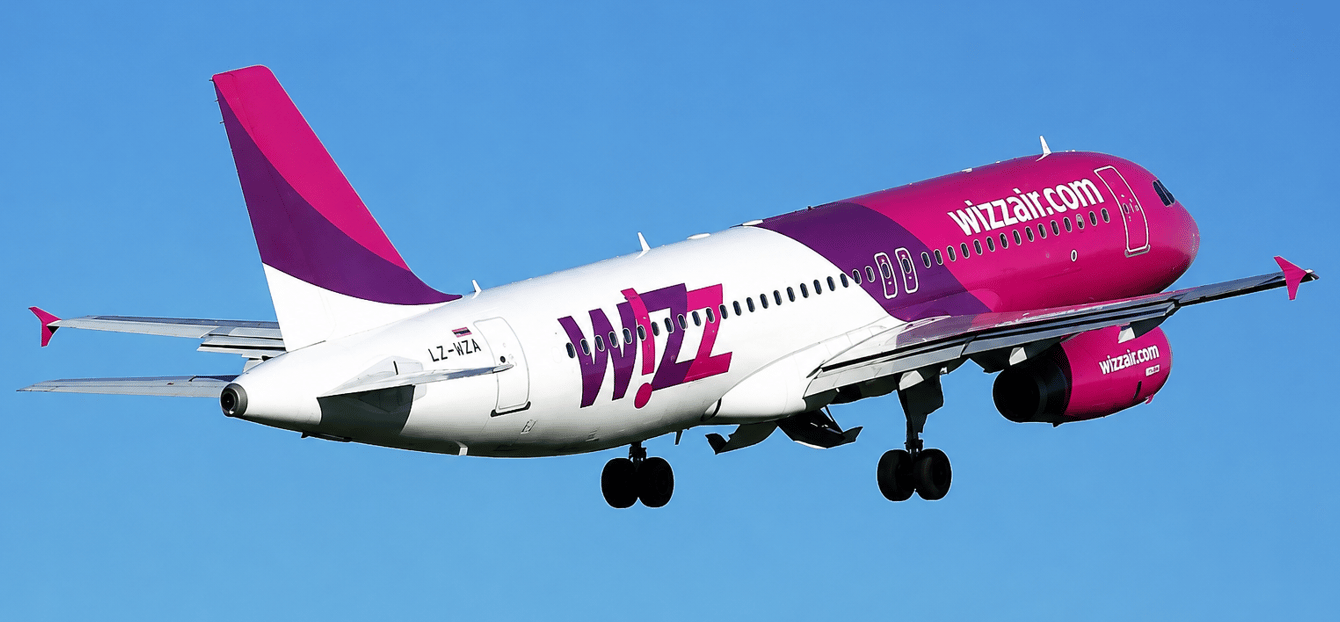
Flying low-cost but staying connected: Wizz Air brings Starlink on board and changes the rules of travel
For years, we have associated low-cost flights with a very simple idea: cheap tickets, luggage stripped back to the essentials, no frills and your phone in flight mode until landing. A silent agreement between passenger and airline: you save money, and the airline gets you from A to B without too many extras. But this “deal” may now have reached a turning point.
Wizz Air has announced the arrival of Starlink connectivity on board its fleet from 2027, opening a new chapter for the world of low-cost flights in Europe. This is not just about “having internet on a plane”. The news tells a much bigger story: travel is becoming increasingly digital, seamless and connected. Even when flying at 10,000 metres above the ground.
And for frequent travellers, remote workers and content creators, this is a small revolution.
Wizz Air and Starlink: what will really change for passengers
Starlink is the satellite internet service developed by SpaceX, the aerospace company founded by Elon Musk. Unlike older in-flight Wi-Fi systems, which were often slow, unstable and expensive, Starlink uses a network of low-Earth orbit satellites designed to provide faster connections with lower latency.
Translated into traveller language: fewer endless loading screens, more chances to browse, work, send messages, post stories, reply to emails or continue a call — provided, of course, that the airline allows certain uses on board.
In Wizz Air’s case, the service is expected to be introduced gradually from 2027 across the entire fleet. It is a significant move, because it comes from an ultra-low-cost airline, a carrier that has built its identity around aggressive fares, high operational efficiency and paid extras.
In other words: if fast Wi-Fi enters the low-cost world too, it may no longer be seen as a business-class luxury, but as a new travel expectation.
Why this news matters especially to travel creators and digital nomads
Until just a few years ago, boarding a plane meant disappearing for a few hours. For many people, it was almost a relief: no notifications, no messages, no urgent requests. Today, however, the way we travel has changed.
Those who work online often see every journey as part of their productive day. A two- or three-hour flight can become useful time to write a newsletter, edit a draft video, reply to a brand, upload content, organise an itinerary or sort out bookings.
For a travel creator, in-flight connectivity can make the difference between publishing in real time and postponing everything until arrival.
Of course, it remains to be seen how Wizz Air will structure the service: free of charge, paid, included for certain passengers, limited in speed or sold as an add-on. But the message is already clear: connectivity is becoming part of the travel experience, not just a simple extra.
Ryanair and easyJet are watching from the sidelines
Wizz Air’s move becomes even more interesting when compared with the approach taken by the other major names in European low-cost travel.
Ryanair, for example, has repeatedly shown caution on the subject. The main issue is not the technology itself, but its economic impact: installing antennas, managing the service, covering operating costs and also considering the effect on fuel consumption are all crucial factors for an airline built entirely around efficiency.
Michael O’Leary, CEO of Ryanair, has suggested that in-flight Wi-Fi could become normal in the future, but not under the current conditions. In short: yes to connectivity, but only when it becomes compatible with the airline’s ultra-low-cost model.
easyJet, meanwhile, has not yet taken a similar large-scale step in the field of high-speed satellite Wi-Fi. Here too, the question remains the same: are low-cost passengers willing to pay to browse while flying? Or will they expect the service to become free?
Wizz Air seems determined to anticipate the answer.
In-flight Wi-Fi is no longer just about entertainment
When people talk about internet on planes, many immediately think of Netflix, Instagram or WhatsApp. But for airlines, the issue is far more strategic.
A stable connection creates new sales opportunities: upgrades, snacks, onboard shopping, loyalty programmes, personalised promotions, sponsored content and digital services. In practice, a connected passenger is not only more satisfied: they are also easier to reach.
This is one of the reasons why many airlines are accelerating. In the United States, several carriers have already chosen Starlink or are working on free or enhanced Wi-Fi services. In Europe, the market is more cautious, especially in the low-cost segment, but the direction of travel seems clear.
The real challenge will be finding the right balance: offering a reliable connection without turning the final ticket price into something far less “low-cost”.
What this could mean for flight prices
The big question is inevitable: will Starlink Wi-Fi make Wizz Air tickets more expensive?
For now, there is no definitive answer. Wizz Air has not yet explained in detail whether the service will be free, included in certain fares or sold as an extra package.
The most likely solution, at least at the beginning, could be a paid model: those who want to browse buy access, while those who prefer to save money continue flying without a connection. This approach would be consistent with the low-cost model, where almost every additional service — from baggage to seat selection — is separated from the base fare.
For creators, freelancers and business travellers, paying a few euros to work during the flight could be worthwhile. For those simply flying away for a weekend and wanting to switch off, flight mode will always remain the perfect option.
A new experience for European travellers
The arrival of Starlink on Wizz Air could also change the perception of the brand. In recent years, the airline has focused heavily on expansion, new routes and a young fleet, but it has also faced operational challenges, including engines requiring inspections, delays and an increasingly competitive European market.
Investing in satellite Wi-Fi is a way to shift the conversation: not only “how much does the ticket cost?”, but also “what kind of experience does this flight offer me?”.
It is an interesting step, because modern travellers are no longer looking only for the lowest possible price. They are looking for combinations: cost, comfort, schedules, airports, baggage, punctuality, the possibility of working, and the ease of managing the journey from a smartphone.
The low-cost flight of the future may still be essential, but it will be far more digital.
Goodbye to flight mode?
Not exactly. And perhaps not for everyone.
Some people will continue to love those two suspended hours without notifications, perhaps with a book, an offline playlist or the window as their only screen. But for many others, especially those whose lives revolve around travel, content and flexible work, the chance to stay online even while flying will be a real advantage.
With its Starlink agreement, Wizz Air is trying to bring this possibility into the world of affordable flights. If the experiment works, Ryanair, easyJet and other European carriers may be forced to rethink their strategies.
For us travellers, the outlook is clear: the future of low-cost travel will not be made only of narrow seats, backpacks measured down to the centimetre and boarding passes on our phones. It will also be a future in which we can take off from Rome, Milan, Budapest or Tirana and keep telling the story of our journey while we are still above the clouds.
At this point, the question is no longer whether the internet will arrive on low-cost flights.
The question is: how much will we be willing to pay to never truly disconnect?
Stay connected even after landing
If you are interested in discovering how the way we travel is changing — from new routes and low-cost flights to digital tools for creators, smart deals and destinations to add to your list — subscribe to the blog newsletter.
You will receive practical tips, travel inspiration and useful updates to help you plan your next departures better, without wasting time on endless research.
And if you want to keep travelling with us beyond the blog, follow us on Instagram, Facebook and TikTok: there we share itineraries, behind the scenes, quick tips, real experiences and ideas to turn every trip into a story worth remembering.
Subscribe and follow us so you do not miss the next guides, news and travel inspiration.
The next take-off may be closer than you think!
Let us know what you think
Leave a comment
Social Link
Follow us on our social channels
Instagram, Facebook e TikTok
ContaCTS
Newsletter
© Copyright 2026 - Zaino in Due