

Wolf Trail: the 3,500-kilometre trek from the Baltic to the Adriatic
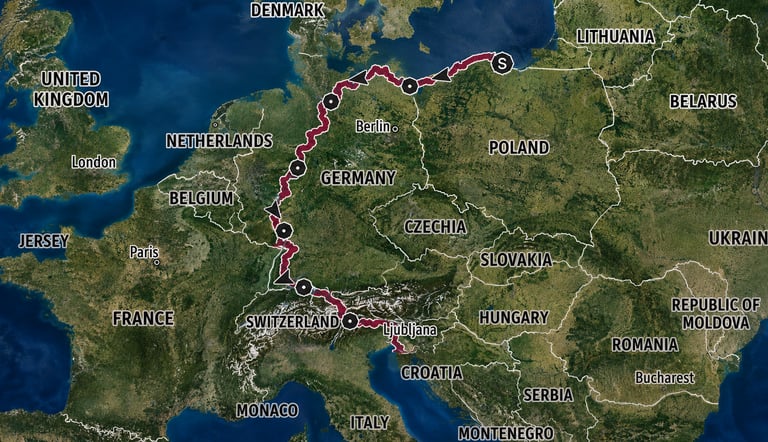
An epic adventure cutting across the heart of Europe: 3,500 kilometres, six countries and one continuous trail leading from the icy cliffs of Northern Europe to the secluded coves of the Gulf of Trieste.
NEWS
Rebecca P. & Raffaele F.
7/28/20265 min read
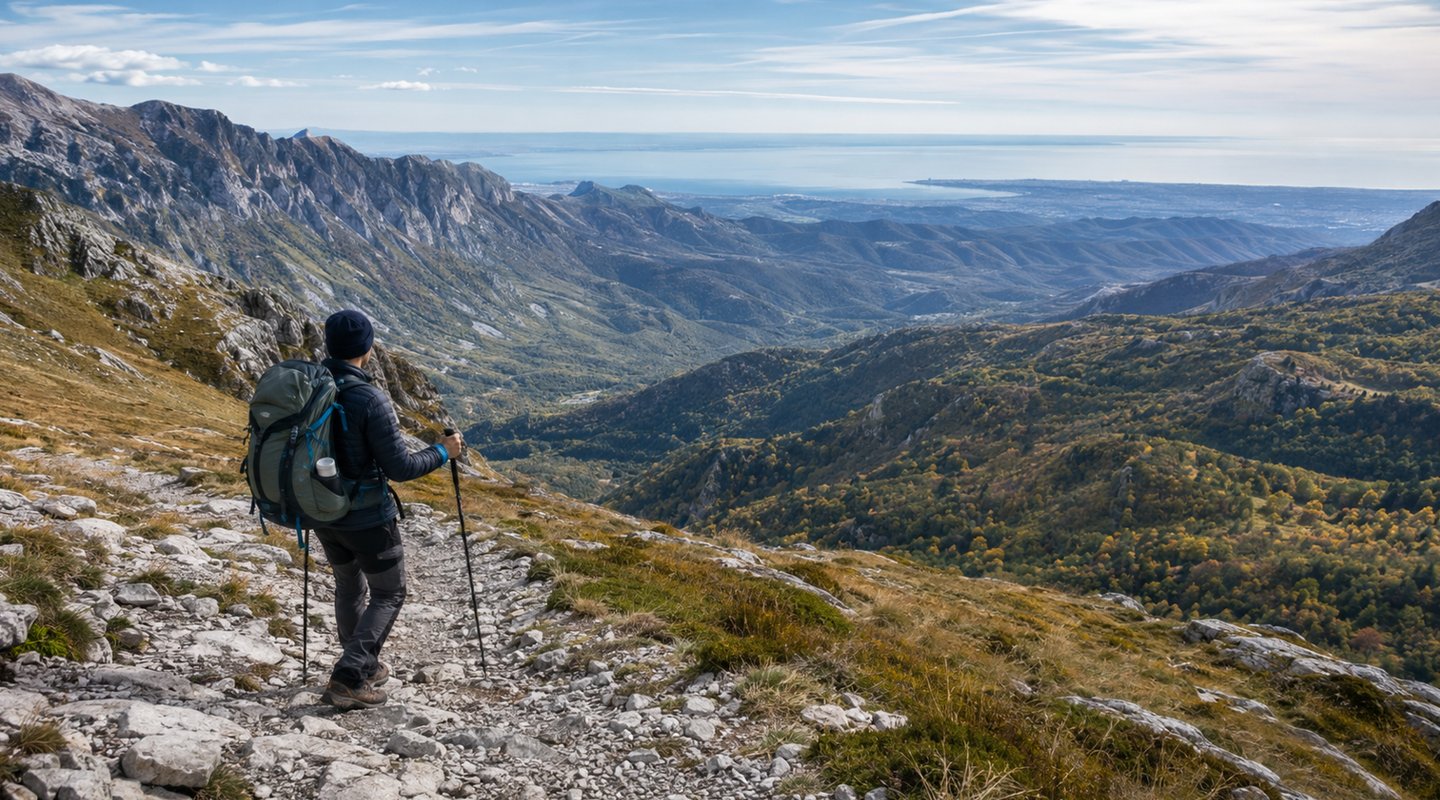
Walking from the Baltic to Trieste: Discovering the Wolf Trail
Setting off from a peninsula overlooking the Baltic Sea, walking south for months and stopping only when you reach the sea at Trieste. It sounds like the premise of a travel documentary — or perhaps one of those long-planned dreams that keeps being postponed year after year. Now, however, that route really exists.
It is called the Wolf Trail, and it offers something rare even among Europe’s great long-distance routes: a journey connecting the north and south of the continent through almost 3,500 kilometres of footpaths, quiet roads, forests, sandy coastlines and high Alpine trails.
A new route built from existing trails
Calling it simply a “new trail” would not be entirely accurate. The Wolf Trail is, above all, a new connection: one vast itinerary stitching together routes that already exist, including sections of the European E1 and E9 long-distance paths and the Via Alpina. Promoted by outdoor brand Jack Wolfskin, the project brings several different hiking networks together to create one continuous journey.
The official distance is approximately 3,493 kilometres, with more than 78,400 metres of total ascent. The route crosses Poland, Germany, Austria, Switzerland, Italy and Slovenia, although some borders are only touched or crossed briefly. The entire trail has been divided into seven major sections, designed both for those dreaming of thru-hiking across Europe and for walkers who would rather complete just one part of the route.
This distinction matters. Completing the entire Wolf Trail is expected to take between four and six months, while one of its larger sections could become a journey of two or three weeks.
Starting on the beaches of the Baltic
The route begins in Hel, at the tip of Poland’s Hel Peninsula: a narrow strip of sand and forest stretching into the Baltic Sea, with open water on one side and the bay on the other. The first section leads towards Świnoujście along a flat, bright coastline that can feel almost hypnotic.
In terms of elevation, this is probably the gentlest part of the trail. The terrain gives walkers time to adjust to spending day after day on foot.
From here, the route enters Germany and takes on a different character. The Mecklenburg coast, the Elbe Valley and the heathlands of the Lüneburg Heath begin to appear. Further south, the landscape becomes hillier and more wooded, passing through areas such as the Rothaar Mountains and the vineyards of the Palatinate.
However, this 3,500-kilometre trek across Europe is not defined by grand scenery alone. A significant part of the experience unfolds in villages, Hanseatic towns, markets, railway stations and small family-run guesthouses. Walkers are not cut off from civilisation for months at a time; instead, they move in and out of it throughout the journey.
The Dolomites and Julian Alps: the trail’s vertical heart
The final major section connects Oberstdorf with Trieste and covers more than 550 kilometres. It is the most spectacular part of the route, but also the one that requires the greatest care and preparation. Here, the Wolf Trail joins the Via Alpina and crosses mountain landscapes in Austria, Italy and Slovenia.
The Dolomites are among the most instantly recognisable highlights of the journey. Their pale towers, sheer rock faces and sweeping valleys are more than just a photogenic backdrop: since 2009, nine Dolomite mountain systems have been included on the UNESCO World Heritage List for their outstanding scenic and geological value.
At this point, the trail loses any remaining resemblance to a walk across the plains. Trekking through the Dolomites and the Julian Alps involves long climbs, rocky terrain, exposed sections and sudden changes in the weather.
Beyond the Dolomites, the route enters Triglav National Park, Slovenia’s only national park and one of the most environmentally sensitive areas along the entire journey. Conservation rules are strict: camping is permitted only in designated areas, and drone use is also restricted. Before entering the park, it is essential to check trail conditions, weather forecasts and mountain-hut availability.
After months of coastlines, plains and mountains, the path begins its descent towards the Karst Plateau. The vegetation changes once again. The air becomes drier, while limestone rocks, vineyards and glimpses of the sea begin to appear. With the outline of the Adriatic on the horizon, the route finally reaches its destination near Trieste.
How fit do you need to be?
The first part of the route may also be suitable for those taking their first steps into long-distance hiking, provided they build up their fitness gradually and do not underestimate the weight of their rucksack. The situation changes in the Alps, where sure-footedness, an ability to interpret changing weather conditions and solid mountain-hiking experience are essential.
When considering how to plan the Wolf Trail, the best place to start is with an honest assessment of your own ability. Walking twenty-five kilometres in a single day is one thing; repeating it for five or six days while sleeping somewhere different each night is another.
Anyone dreaming of completing the entire route should test themselves first on a one- or two-week trail, ideally one involving elevation gain and a fully loaded rucksack. The body learns. The mind needs to learn too.
The official project describes the Wolf Trail as suitable both for experienced hikers and for beginners who choose to start with one of its shorter sections. It also makes clear, however, that the terrain becomes progressively more challenging as the route heads south.
When to hike the Wolf Trail
The best time to set off depends on which part of the route you intend to walk. The Baltic coast and northern Germany have very different requirements from the high Alpine passes.
For a complete thru-hike, setting off in spring could theoretically allow you to reach the mountains during summer or early autumn. This is not a foolproof formula, however. Late-lying snow, thunderstorms, mountain-hut closures and conditions on the passes can all affect your plans. The project warns that between October and March, snow in the Alps may make some sections difficult or completely impassable.
The best time to hike the Wolf Trail should therefore be determined by planning the journey backwards: first decide when the Alpine section can be crossed safely, and then establish your departure date from the Baltic.
Those walking only one section will have far more freedom. Coastal and lowland routes can also work well in spring or early autumn, while the higher-altitude sections are best attempted once stable summer conditions have arrived. Local updates should always be checked before setting off.
Where to stay along the route
A journey across Europe means dealing with very different rules and regulations. Wild camping is not automatically permitted everywhere and, in many protected areas, it is either prohibited or tightly controlled. This is particularly true in several Alpine regions and in Triglav National Park.
The Wolf Trail has been designed by linking paths that provide access to existing facilities, including authorised campsites, mountain huts, guesthouses, hostels and villages with essential services. This does not mean that you will always find a room without booking, especially during the summer months. It does, however, mean that the journey can be planned without relying on unauthorised camping as a regular solution.
Working out where to sleep along the Wolf Trail is likely to be one of the most demanding parts of the planning process. Alpine accommodation will require particular attention and advance booking, while in Germany’s towns and rural areas, places to stay may be unevenly spaced in relation to the distance you intend to cover each day.
Leaving some room for flexibility is important. After a thousand kilometres, a completely rigid itinerary can begin to feel like a cage.
Ready to choose your section of the trail?
What about you? Would you take on the entire Wolf Trail, or would you rather begin with one of its seven sections? Tell us in the comments and share this article with the person you would set off with tomorrow morning, rucksack on your back.
To receive new guides, unusual itineraries and inspiring travel stories, subscribe to the blog newsletter. You will also find more content, updates and ideas on our Instagram, Facebook and TikTok. Follow us and keep the journey going, even when the trail comes to an end.
Let us know what you think
Leave a comment
Social Link
Follow us on our social channels
Instagram, Facebook e TikTok
ContaCTS
Newsletter
© Copyright 2026 - Zaino in Due